
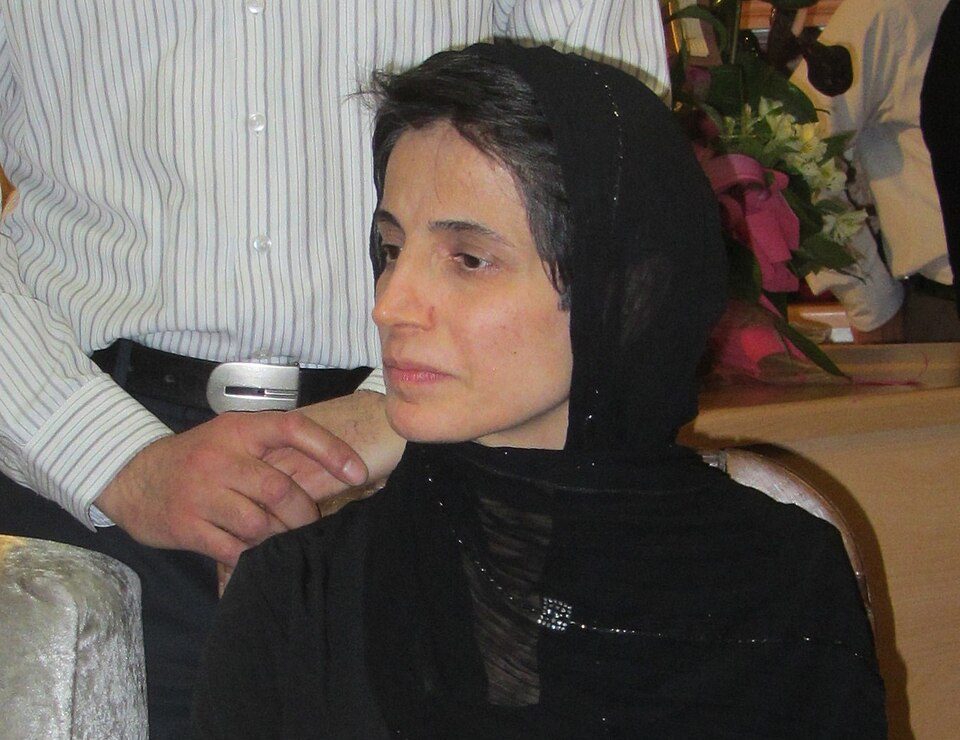
If there is any case to sum up the oppressive cruelty of the Iranian regime when it comes to clamping down on the right to free speech and human rights, it is that of Nasrin Sotoudeh.
The award-winning human rights lawyer was arrested for a scarcely believable fifth time in April 2026, charged with “propaganda against the state” after criticising the actions of the Iranian government in relation to the war with the US and Israel and the state’s brutal suppression of protests. When released on bail a month later, she spoke out about the mistreatment she received at the hands of the Iranian authorities while in detention, describing being given heavy beatings, inedible food and existing in “inhumane conditions”.
Sotoudeh’s arrest was greeted with outrage around the world, invoking the ire of the global human rights community, who demanded the release of one of their most accomplished members. Upon her release, Sotoudeh thanked those who had supported her.
“I have gained my freedom thanks to those who have always cared about us political prisoners in Iran,” she stated in a social media post. “We have many friends all over the world, from Iranians to non-Iranians whose hearts ache for the plight of modern humans who are constantly forced to pay a price to live a normal and dignified life.”
The terrible irony of the situation is that if this had happened to someone else, Sotoudeh herself would have been the first port of call when looking for help, and she would no doubt have been one of the first to offer it.
Sotoudeh began practising law in 2003, after spending some time in her early career as a newspaper journalist writing about human rights violations. She worked on cases concerning children’s rights, representing juveniles sentenced to death or children facing domestic abuse, as well as cases involving women, ethnic minorities and religious minorities. Thus began a long, impressive career in fighting for human rights in Iran.
Her husband Reza Khandan, a graphic designer turned activist whom she met at a hiking group and married in 1995, confirmed that her intention was always to be on the front lines of the fight for the protection of human rights. “Even before she became a lawyer I could see how much she wanted to help everyone,” he said in the 2020 documentary Nasrin.
Sotoudeh was one of the first to join the Campaign for One Million Signatures, a movement launched by Iranian women in 2006 to collect signatures in support of changing laws that were discriminatory against women. Although the movement garnered international support and acclaim, it was heavily suppressed by the authorities in Iran, who arrested and jailed many of the activists taking part in the campaign. Sotoudeh represented several of the persecuted campaign members herself and soon found herself in the crosshairs of the state.
She was arrested for the first time in June 2008 while preparing to attend a gathering in Tehran to commemorate the National Day of Solidarity of Iranian Women. After representing several of the other women who were also arrested, she was put on trial herself in February 2009 for disturbing the public and disobeying the police, although she was never sentenced.
Refusing to be cowed by the experience, Sotoudeh continued to fight for women’s rights in the country, forming the Coalition of Women’s Rights Movement in the run up to the presidential election in 2009. This once more evoked the anger of the Iranian authorities, and she was arrested for the second time in 2010 on charges of spreading propaganda and conspiring to harm state security. This time, her detention was longer and she was kept in solitary confinement and denied visits or phone calls to her family, leading her to go on hunger strike for several weeks. In January 2011, Sotoudeh was sentenced to 11 years in jail before being released in September 2013 along with ten other political prisoners.
Sotoudeh continued to speak out against human rights violations in Iran, representing political prisoners and activists including members of the Girls of Revolution Street group who publicly removed their hijabs to protest Iran’s compulsory hijab law. She appears in the 2015 film Taxi Tehran, a satirical documentary from the award-winning Iranian director Jafar Panahi, where she discusses the current political climate inside the country and the tactics used to persecute dissidents: “First they mount a political case, they beef it up with a morality charge, then they make your life hell,” she tells the filmmaker. “They make your best friends your enemies.”
She was proved correct when in 2018, to the outrage of the international community, she was once again arrested and charged with espionage, dissemination of propaganda and disparaging the Supreme Leader of Iran, Ali Khamenei. She was convicted in absentia after refusing to attend the trial in protest of being unable to select her counsel and sentenced to ten years in prison.
Not content with locking Sotoudeh up, Iranian authorities continued to target her family. Her daughter Mehraveh Khandan was arrested in 2020 while Sotoudeh was on hunger strike in prison, and her husband Reza had his bank accounts frozen and was himself arrested in 2024 for his work supporting women’s rights in Iran. Despite Sotoudeh’s efforts campaigning for his release, he remains there to this day.
Sotoudeh was eventually released on medical leave in 2021 with a heart problem that required an angioplasty. However, she was rearrested in 2023 while attending the funeral of teenager Armita Geravand, who went into a coma and died after allegedly being assaulted by the Islamic religious police for not wearing a hijab, before later being released. Sotoudeh’s fifth and latest arrest in April this year therefore elicited dismay and condemnation, but not surprise.
The international uproar that occurs each time Sotoudeh is arrested is a testament to her standing both in Iranian civil society and the global human rights community. A letter signed by 60 members of the European Parliament demanding her release from prison in 2018 described her as “an immensely courageous and respected lawyer”, while Nobel Peace Prize-winning lawyer and writer Shirin Ebadi lauded her as an inspiration, writing in Time magazine in 2021 that “as she strives to promote human rights and human values, Nasrin Sotoudeh inspires others to follow in her footsteps.”
Sotoudeh is an example of perseverance in the face of intimidation and oppression. Her case – which is unfortunately not an isolated incident – shows Iran at its worst by exemplifying the cruel and undemocratic actions of the state in their crackdown against dissidents, but also at its best through the efforts of those within the country refusing to back down, demonstrating that there are always people who are willing to fight back. Her incredible bravery has been invaluable for the human rights cause; it is now up to the rest of the world to show the same fight to secure her freedom.