
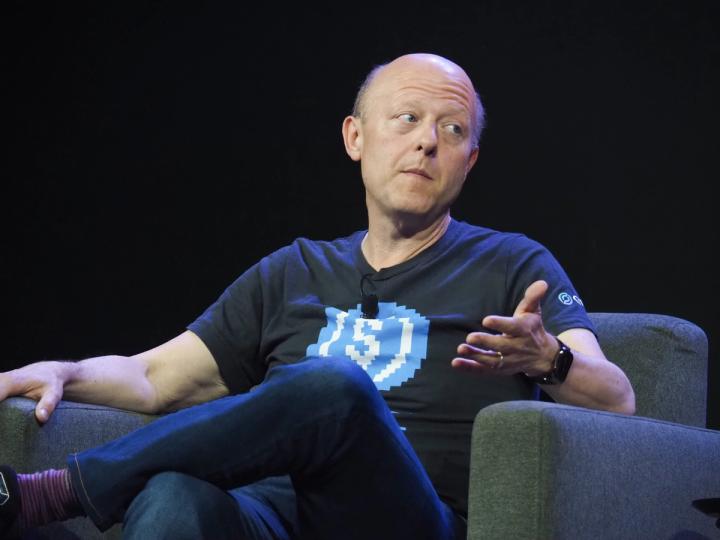
“Large groups of large companies coordinate poorly, have misaligned incentives, slow things down and rarely create the space for real durable innovation,” he wrote.
Test for the consortium model
That skepticism is shared by Lorenzo Valente, director of digital asset research at ARK Invest, who noted that crypto has seen several consortium-backed stablecoin initiatives over the years, including Meta’s Diem project and Paxos-led Global Dollar Network.
“Every year we get our consortium-style initiative around a stablecoin,” Valente wrote in an X post. “While the set of players here is obviously potent, I remain highly skeptical any of these initiatives can hit scale.”
He said Open Standard’s biggest challenge may be coordinating more than 140 participants with competing interests.
“A consortium of hundreds of rivals has no precedent for working,” he said. “The pace of decision-making across competitors is going to be glacial.”
Valente likened the model to decentralized autonomous organizations, or DAOs, whose governance structures often struggled to make timely decisions.
“‘Owned by everyone’ almost always means accountable to no one,” he said. “I’d bet on the two operators who can ship unilaterally over a committee that has to ask hundreds of rivals for permission.”
He also questioned whether large banks, payment networks and technology companies would remain committed if the project encounters regulatory pressure. Circle and Tether, he noted, have spent years building global regulatory infrastructure and licensing, while a consortium could find it harder to stay aligned if conditions become more challenging.