


TLDR
- Brent crude fell to ~$74 and WTI to ~$70.77, both on track for roughly 7% weekly losses
- Tanker traffic through the Strait of Hormuz hit its highest level since the Iran conflict began
- Most of the traffic rebound is outbound vessels that were previously stranded, not new inbound tankers
- Iran struck a commercial vessel near Hormuz, prompting the IMO to suspend its evacuation plan
- Venezuela’s earthquakes could disrupt oil output due to power outages, adding a small bullish factor
Oil prices dropped nearly 2% on Friday and were set to close out a third straight week in the red. Both Brent crude and West Texas Intermediate were tracking losses of around 7% for the week.
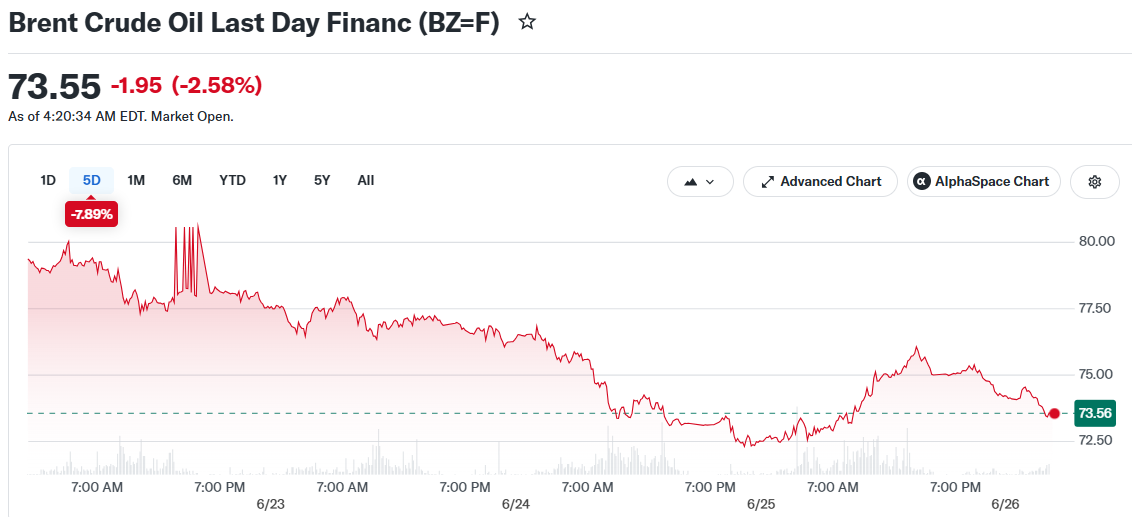
At the time of writing, Brent was trading at around $74 per barrel. WTI was changing hands near $70.77. Oil has now erased most of its gains from the Iran conflict, having surged above $120 a barrel at the height of the crisis.
Hormuz Traffic Rebounds, But Analysts Urge Caution
The main driver of the price drop is improving tanker traffic through the Strait of Hormuz. Crude shipments through the strait climbed to their highest level since the conflict began earlier this year.
🇮🇷 After Trump posted that the Strait of Hormuz is “completely open” the IRGC shot a Singapore-flagged cargo ship on it.
The Ever Lovely. The bridge damaged, but no casualties.
Iran just put a hole in a commercial vessel days into a deal that was supposed to guarantee safe… https://t.co/kGuwQipVAe pic.twitter.com/rSEB4hvbL0
— Mario Nawfal (@MarioNawfal) June 25, 2026
However, analysts at ING warned that the picture is not as straightforward as it looks. They pointed out that almost all of the traffic is outbound — tankers that had been stuck in the strait since March and are now leaving.
The number of tankers coming into the Persian Gulf to load fresh crude remains low. ING said that once the stranded vessels have cleared out, flows could pull back sharply.
Reuters also noted that overall vessel traffic is still a fraction of pre-war levels. Before the conflict, an average of 125 ships used the waterway each day.

Iran Strike and Peace Deal Uncertainty
A cargo ship was struck near Oman earlier in the week. US officials confirmed Iran fired on the vessel. The attack briefly pushed prices up more than 2% before the market resumed its downward trend.
The International Maritime Organization suspended its plan to help evacuate stranded ships and crews following the strike. That added fresh doubt about how durable the preliminary US-Iran peace deal really is.
That deal, reached last week, had helped reopen the strait and was the main reason oil prices started falling from their peaks above $90 a barrel earlier this month.
Venezuela Earthquakes Add Supply Risk
Devastating earthquakes hit Venezuela earlier this week. While the country’s oil infrastructure was not directly in the affected zone, power outages caused by the quakes are expected to disrupt production.
Analysts noted this as a potential supply risk, though it has not been enough to reverse the broader downward trend in prices.
The market’s attention remains firmly on the Hormuz situation and the progress of the US-Iran negotiations. Until those questions are settled, traders appear reluctant to push prices higher.
🚨 Our JUNE Stock Picks Are Live!
A new month means new opportunities. Our analysts have just released their top stock picks for June, highlighting companies with strong momentum that rank highly on our KO Score algorithm. We’re also now sharing trade ideas for both long-term and short-term investors, giving you more ways to spot potential opportunities in the market.
Sign up to Knockout Stocks today and get 50% off to unlock the full list and see which stocks made the cut.
Use coupon code Special50 for your exclusive discount!