
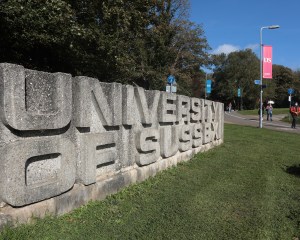
 In March 2025, the Office for Students (OfS) fined the University of Sussex £585,000, the highest amount ever levied by the regulator. This was largely because after a three-and-a-half-year investigation, which the University’s vice-chancellor Professor Sasha Roseneil described as “Kafkaesque”, the OfS had decreed that the University’s Trans and Non-Binary Equality Policy Statement (hereafter the Policy Statement), which sought to protect the rights of trans and non-binary people in the University, breached the institution’s regulatory requirement to uphold freedom of speech and protect academic freedom.
The University applied for judicial review of the OfS decision, and in a judgment handed down on 29 April ( R (The University of Sussex) v The Office for Students [2026] EWHC 984 (Admin)) the High Court, in an unusually tough rebuke to a regulator, ruled in Sussex’s favour. This was on the grounds that the OfS had misapplied concepts of freedom of speech and academic freedom, exceeded its regulatory powers and come to a decision that “was vitiated by bias because [it] approached the decision with a closed mind and had therefore unlawfully predetermined the decision” (455). The judge, Mrs Justice Lieven, argued that, on the evidence put before the Court, “the OfS had closed its mind to anything that would lead to not finding breaches [of Sussex’s conditions of registration] and being unable to therefore sanction the university” (438). The judgment was particularly critical of Susan Lapworth, the OfS’s previous chief executive, claiming that she had wanted to investigate Sussex in order to send a “strong signal” (428) on freedom of speech to other universities, and that her “mindset from the outset appears to have been that she wished to use the university as a tool to incentivise the rest of the sector” (429).
On 19 May the OfS announced that it would not appeal the judgment “in the best interests of students, the sector and the OfS. It is the best way to achieve freedom of speech and academic freedom across the world of higher education”.
The judicial review application challenged the legality of the OfS’s Final Decision on a number of grounds. However, this raised a considerable number of issues relating to freedom of speech – in particular how the OfS understands the notion of freedom of speech within the law – and this is what I want to concentrate on in this series of articles.
A chilling effect
The Policy Statement, which was originally published in November 2018, initially contained a requirement for “any materials within relevant courses and modules [to] positively represent trans people and trans lives”, an instruction that “the curriculum shall not rely on or reinforce stereotypical assumptions about trans people” and a warning that transphobic propaganda would not be tolerated. The Statement ran to only two pages, but the OfS argued that all three of the clauses quoted above exerted a “chilling effect” by creating the potential for staff and students to self-censor by refraining from expressing certain lawful views for fear of facing disciplinary action. In its view, this breached one of the University’s conditions of registration (E1), which entail that its governing documents must uphold the relevant public interest governance principles – in this instance the duty on placed on higher education providers by s.43 of the Education (No2) Act 1986, which states that:
Every individual and body of persons concerned in the government of any establishment to which this section applies shall take such steps as are reasonably practicable to ensure that freedom of speech within the law is secured for members, students and employees of the establishment and for visiting speakers.
In its case against Sussex, the OfS made much of the resignation of Professor Kathleen Stock in October 2021 amid protests from students over what they alleged were her transphobic views. She was the only member of the University interviewed by the OfS (indeed, twice) which otherwise spent very considerable amounts of time and resources, as Professor Roseneil testified, “trawling hundreds of university documents and webpages, reviewing policies, statements, guidance, and minutes to find potential breaches of the conditions of registration to which higher education providers must adhere”. (One is tempted to add: until it found what it was looking for). The OfS utilised Professor Stock’s evidence as proof that the Policy Statement had exerted a chilling effect on teaching because she had originally told them that she felt unable to teach gender critical work. However, after Sussex told the OfS that she had actually included such work on her reading lists, including two of her own articles, she was interviewed again by them and stated that “to my best recollection they were not ever taught by me to students in the classroom, partly due to my nervousness about introducing sex and gender identity as a discussion topic”.
However, it is important to understand that the purpose of High Court case was not to consider what had happened to Professor Stock but, as noted above to test the legality of the OfS’s Final Decision. As Lieven J stated in the opening pages of her judgment, although her experiences at Sussex
“form the backdrop to the OfS investigation I am not adjudicating on any issues relating to the events surrounding Professor Stock. That was not the subject of the OfS investigation, or its decision” (17).
However, the issues of free speech and academic freedom were central to both the OfS investigation and Sussex’s successful application for judicial review of the OfS decision.
Positive images
On 16 August 2022, within days of Professor Roseneil’s appointment, the University had removed the clause from the Policy Statement about the positive representation of trans people; this was on the grounds that it thought that it was indeed inconsistent with freedom of speech within the law and academic freedom. However, this was long before the University realised that the OfS had the Policy Statement in its sites. In January 2023 the University’s Council had approved a revised version of the Freedom of Speech Code of Practice (hereafter the Code of Practice). This had been created in the first place in order to comply with the University’s obligations under s.43(3) of the Education (No2) Act 1986, which provides that universities must possess a code of practice setting out how they will discharge their duty to ensure that freedom of speech within the law is secured for those working in the institution
The revised 2023 version added a paragraph emphasising that:
All staff, students and visitors have the right to hold opinions and to receive and impart information and ideas so long as they do not break the law. The right may be restricted to protect the rights of other people if the restriction is proportionately justified.
Additionally this stated that “academic staff at the University have the right to (a) question and test received wisdom and (b) put forward new ideas including controversial or unpopular opinions, without fear of being sanctioned for doing as long as they do not break the law”. This wording is in fact taken straight from Part A1 of the Higher Education (Freedom of Speech) Act 2023. It concluded:
Every member of the University is expected to uphold the right to freedom of speech and the right to academic freedom and nothing in this Code of Practice should be taken to limit the right to academic freedom or justify a disproportionate interference with the right to freedom of speech.
Furthermore, throughout this entire period, academic freedom was protected under Statute VII of its Charter and Statutes.
After the OfS had commenced its investigation into Sussex’s procedures regarding freedom of speech and academic freedom, the University wrote to it in January 2023 pointing out the above-mentioned revisions to both the Policy Statement and the Code of Practice. Nevertheless the OfS proceeded against it, not only refusing to engage directly with the University but warning its vice-chancellor not to speak publicly during the investigation. Among other things, this meant that Professor Roseneil was unable to contribute to the Lords Industry and Regulators Committee Inquiry into the OfS. This is particularly ironic given that the OfS’s treatment of Sussex mirrors some of the findings of the Inquiry. For example, that it “gives the impression that it is seeking to punish rather than support providers towards compliance, while taking little note of their views”, that “its approach to regulation often seems arbitrary, overly controlling and unnecessarily combative” and that “it has been selective in choosing which of its duties to prioritise”.
Negative stereotypes
In her judgment, Lieven J observed that Professor Stock herself had taken issue only with the clause in the Policy Statement about positive representation and not with those clauses relating to stereotyping and disciplinary measures. It was the OfS that objected to these (332). Such issues are, however, still addressed in the most recent iteration of the Policy Statement. This lays down that “the curriculum shall not rely on or seek to reinforce stereotypical assumptions about trans people” and “transphobic abuse, harassment or bullying (e.g. name-calling/ derogatory jokes, unacceptable or unwanted behaviour, intrusive questions) are serious disciplinary offences for staff and students and will be dealt with under the appropriate University procedures”. It also includes at the end a Safeguarding Statement which notes that:
This Policy Statement is intended to promote the fair and equal treatment of trans people. That is compatible with the University’s obligation to ensure, so far as reasonably practicable, that freedom of speech within the law is secured for members, students and employees of the establishment and for visiting speakers (as required by section 43 of the Education (No.2) Act 1986), and the requirement to have regard to the need to ensure that academic staff have freedom within the law to (a) question and test received wisdom and (b) put forward new ideas including controversial or unpopular opinions without placing themselves in jeopardy of losing their jobs or privileges at the University (as required by section 202 of the Education Reform Act 1988). For the avoidance of doubt, nothing in this Policy Statement should be taken to justify sanctioning academic staff for questioning or testing received wisdom or putting forward new ideas including controversial or unpopular opinions within the law, nor should this Policy Statement be taken to justify disproportionate restrictions on freedom of speech.
Nonetheless, in the OfS’s view, the Policy Statement’s clauses relating to stereotyping and disciplinary measures still constituted potential threats to both freedom of speech and academic freedom, because students and staff were likely to be “directly restricted, and chilled” by them. However, Lieven J concluded that “the error of law under these Grounds is manifest” because the OfS was incorrect in asserting that academics at Sussex could be in jeopardy of losing their jobs for exercising their academic freedom within the law. She explained that:
The requirement in condition E1 and s.2 of HERA [the Higher Education Research Act 2017] to protect academic freedom by not allowing an academic to be in jeopardy of losing their job is absolutely clear. It does not encompass jeopardy of disciplinary proceedings or of other detrimental effects, such as psychological impacts; nor does it include a “chilling effect”, however harmful that might be to freedom of speech, or indeed academic freedom. (266)
She went on to argue that “in order to determine whether such jeopardy exists it is necessary to read the relevant University documents as a whole, and to read them fairly and in accordance with a proper, lawful interpretation” (267). This the OfS had failed to do. But if this is done, she stated, it is clear that that a breach of the Policy Statement could not result in dismissal. Thus she concluded that “the reliance on the chilling effect and potential for stress and anxiety were irrelevant considerations in respect of this purported breach” (271).
Julian Petley is the Honorary and Emeritus Professor of Journalism, Brunel University London