

In CLARITY Act news today, the American Bankers Association and the Bank Policy Institute issued a joint statement on Monday, May 4, 2026, formally opposing the stablecoin yield provisions embedded in the latest draft of the Digital Asset Market Clarity Act, commonly known as the CLARITY Act.
It warns Senators Thom Tillis (R-NC) and Angela Alsobrooks (D-MD) that the current legislative language falls materially short of protecting bank deposits from yield-bearing stablecoin instruments, while separately signaling that the banking lobby intends to submit detailed amendment recommendations to lawmakers within days.
This is not simply a dispute over interest payments on digital tokens. It represents a structural contest over who is permitted to issue dollar-denominated instruments at scale within the US financial system, and under what capital regime.
The banking industry’s opposition to the CLARITY Act’s stablecoin regulation framework reflects a deeper institutional anxiety: that Congress is on the verge of codifying a two-tier architecture in which crypto-native issuers operate under lighter reserve and conduct obligations than federally supervised depository institutions, a condition the banks argue SAB 121 has already made untenable.
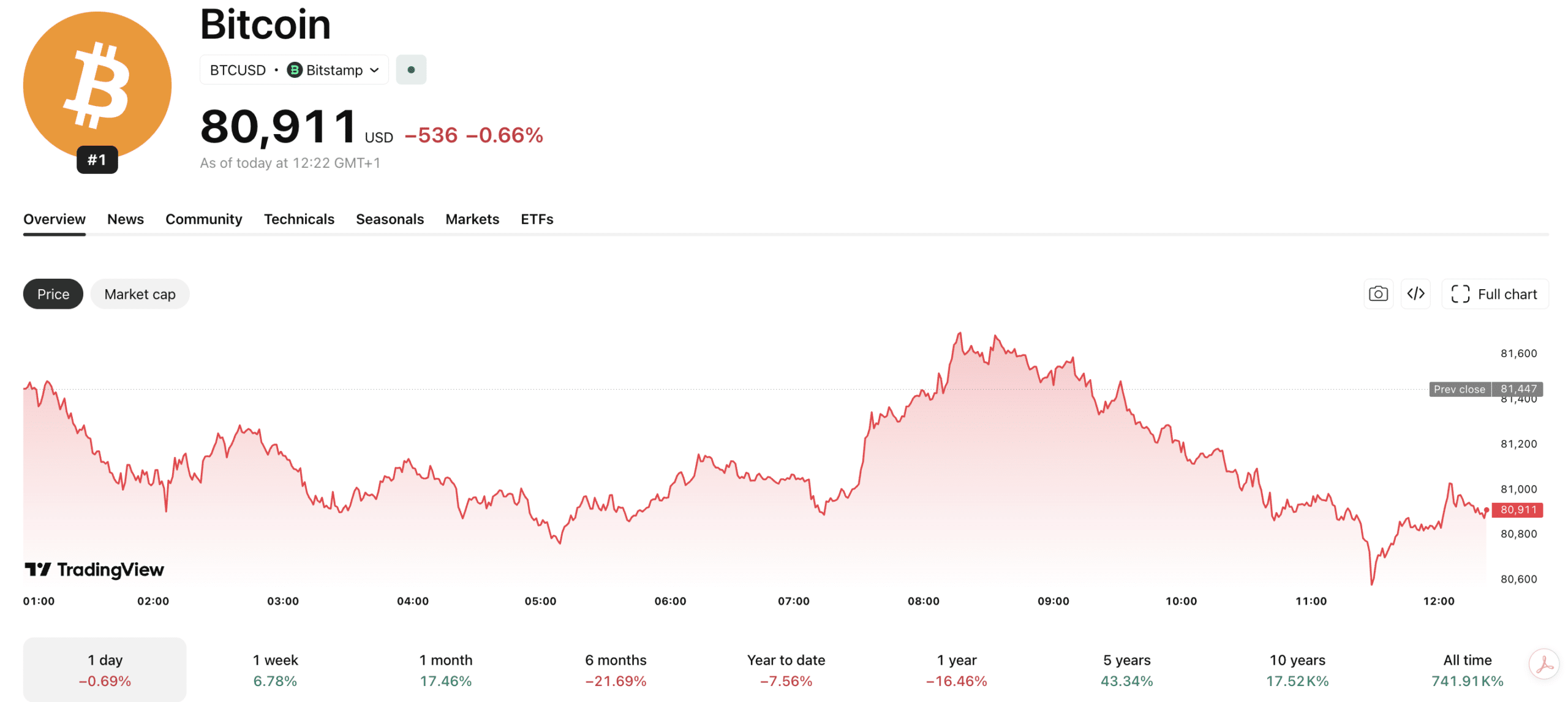
(SOURCE: TradingView)
Clarity Act News: What the Banking Industry Is Actually Demanding
The Digital Asset Market Clarity Act passed the House in July 2025 with a 294-to-134 vote, creating a proposed federal framework for digital asset regulation. However, it has stalled in the Senate over concerns that payment stablecoins may offer yield or rewards, which the banking lobby views as a way to circumvent regulated deposit accounts.
The Tillis-Alsobrooks compromise draft, released in April 2026, aimed to balance these concerns but missed the Senate Banking Committee’s markup deadline due to intensified bank lobbying.
The draft prohibits traditional yield on stablecoins but allows rewards based on account balances or duration. Banking groups argue these are akin to yield products and could divert funds from bank deposits, potentially reducing loans by over 20%, a claim the crypto industry disputes.
Additionally, banks are concerned about the SEC Staff Accounting Bulletin No. 121, which requires them to hold capital reserves for crypto assets they manage for clients, hindering their ability to compete with non-bank stablecoin issuers like Circle or Tether.
JUST IN: Senator Cynthia Lummis warns that every day the CLARITY Act is delayed is another day American companies consider building their future somewhere else https://t.co/NFsjGXWGUB pic.twitter.com/ES2Uje7uDo
— crypto.news (@cryptodotnews) May 7, 2026
DISCOVER: Best crypto to buy right now – CoinSpeaker’s updated guide
CLARITY Act News: SAB 121 and the Unlevel Playing Field – Why Banks Say the Current Framework Is Untenable
The banking industry’s opposition to the CLARITY Act’s stablecoin regulations seems driven by competitive concerns rather than by deposit flight alone. If Congress establishes a stablecoin framework without addressing the SAB 121 capital asymmetry, banks could remain at a disadvantage compared to crypto-native issuers.
Current non-bank stablecoin issuers operate under state licenses or offshore regulations that don’t impose the same capital requirements as banks. As a result, popular stablecoins like Circle’s USDC and Tether’s USDT dominate the market, while bank-issued stablecoins struggle due to high costs associated with existing SEC guidance.
Additionally, President Trump has publicly supported the CLARITY Act, framing crypto adoption as a national security issue. This puts banking lobbyists in a challenging position of opposing legislation backed by the executive branch, which could limit how much Senate Republicans are willing to accommodate their demands, leading up to the November 2026 midterm elections.
🚨 The CLARITY Act is suddenly looking very real
Polymarket odds jumped to 65% after:
• Senate momentum accelerated
• Stablecoin disputes cooled
• White House pushed for July 4 passageBut now Sen. Gillibrand is drawing a line:
“No crypto market structure bill without… pic.twitter.com/4J2sutNqtd
— Wise Advice (@wiseadvicesumit) May 7, 2026
Crypto Industry and Congressional Response: What the Pushback Against Bank Amendments Reveals
The crypto industry’s response to the banking lobby’s concerns has been assertive. Coinbase’s Chief Policy Officer, Faryar Shirzad, criticized the banking industry’s claims as rooted in competitive self-interest rather than real systemic risk, indicating Coinbase’s commitment to supporting the Tillis-Alsobrooks compromise without further amendments.
Current prediction markets show uncertainty about the CLARITY Act’s passage, with Polymarket odds around 46% and Galaxy Research suggesting a 50-50 chance, factoring in the Senate’s 60-vote requirement and upcoming recesses. Complicating matters, some Democratic senators have pushed for ethics clauses that the White House has rejected, making a clean vote more challenging.
The fate of the CLARITY Act news depends on whether the banking lobby’s expected amendment submissions can reshape the bill without prompting crypto stakeholders, such as Coinbase, to withdraw. Ultimately, the willingness of Senate Republicans to accommodate these demands while maintaining support from both the White House and the crypto sector will be crucial in establishing a stablecoin regulatory framework by 2026.
EXPLORE: Best Ethereum wallets for 2026 – CoinSpeaker’s updated guide
next
Disclaimer: Coinspeaker is committed to providing unbiased and transparent reporting. This article aims to deliver accurate and timely information but should not be taken as financial or investment advice. Since market conditions can change rapidly, we encourage you to verify information on your own and consult with a professional before making any decisions based on this content.

Daniel Frances is a technical writer and Web3 educator specializing in macroeconomics and DeFi mechanics. A crypto native since 2017, Daniel leverages his background in on-chain analytics to author evidence-based reports and deep-dive guides. He holds certifications from The Blockchain Council, and is dedicated to providing “information gain” that cuts through market hype to find real-world blockchain utility.