
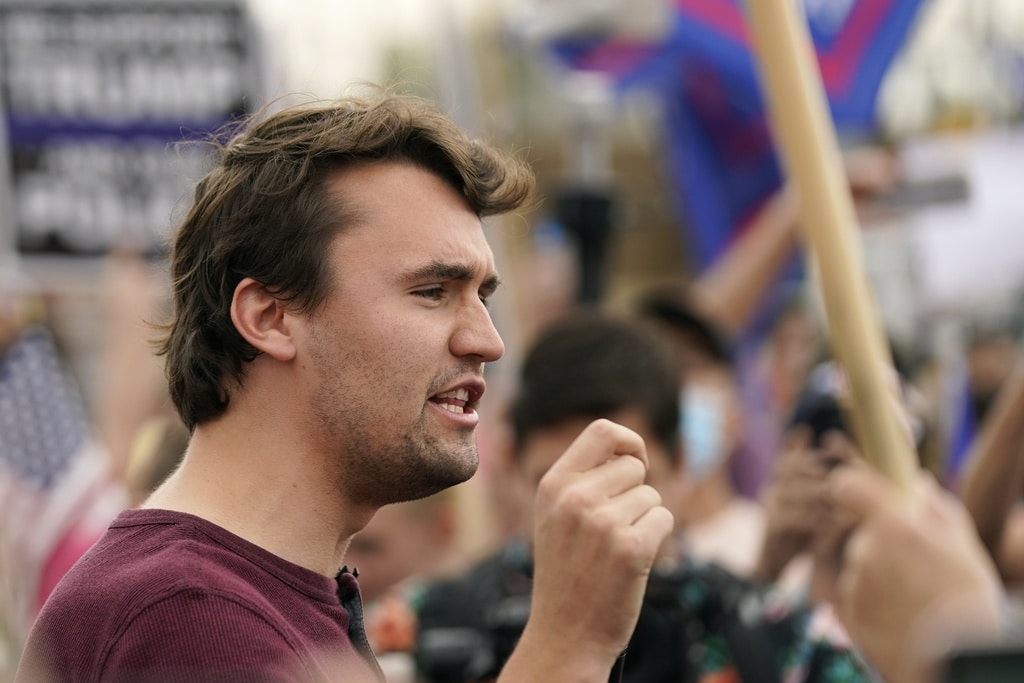
The Tennessee Legislature has just passed legislation that honors the late conservative activist Charlie Kirk and establishes new rules concerning free expression at the state’s public universities. The new law is, of course, important to Tennesseans, but it is also likely to serve as a model for other states exploring their own free-speech legislation.
Here’s a look at the implications of the new law:
1. How will the new law affect public universities?
The law requires that each university adopt the principles associated with the Chicago Statement, a widely embraced commitment to protect free speech on college campuses. It was adopted by the University of Chicago in 2015 and essentially guarantees free expression for all members of the campus community. And it cautions that it “is not the proper role of the University to attempt to shield individuals from ideas and opinions they find unwelcome, disagreeable, or even deeply offensive.”
2. What else will change for university administrations?
A second policy mandated under the Tennessee law requires the university to declare institutional neutrality and not take public stands concerning political and social issues. As a practical matter, taxpayer-funded universities rarely step into the political arena. Under these neutrality policies, university administrations remain empowered to make public statements about issues that have an impact on the campus community and the quality of education.
3. How does the legislation apply to on-campus speakers?
The law guarantees that the university will not bar a speaker on the basis of the speaker’s message or opinions. Couple this with the guarantee that students can organize clubs and organizations and receive university recognition regardless of a group’s views, and we’ll see more speakers overall, more controversial speakers and more protests. The law also punishes efforts to prevent a speaker from talking, targeting heckling and planned demonstrations inside of a venue.
A prohibition against walkouts during a speaker’s presentation has raised some concerns, but thanks to some guidance by the Foundation for Individual Rights and Expression, it’s relatively narrow. An earlier draft said even momentary disruption during a presentation could be punished, but the final version says limits apply only when the walkout is organized, substantially disruptive and intended to prevent the free speech of the speaker. Nothing prevents an individual or several people from spontaneously walking out when offended by a speaker’s remarks.
4. What impact does the Charlie Kirk act have on college professors?
This may be the most important aspect of the law. It guarantees that there will be no punishment for professors who embrace controversial views. It’s very common for outraged legislators and public officials to demand the firing of professors who take unpopular stands. This bill provides that a university “shall not retaliate in any way or discriminate in any manner against a faculty member on account of the viewpoints expressed in the faculty member’s scholarly work, or on account of any speech or writing protected by the First Amendment of the United States Constitution.” This is much-needed protection for academic freedom.
That noted, a professor can still be dismissed if his or her comments impair the ability to do their jobs. A math professor who spends class time railing about politics every week could be disciplined for not teaching the subject. A world history professor could face consequences for denying that the Holocaust happened. It’s not about viewpoint; it’s about competence.
5. On balance, does the Charlie Kirk Act strengthen free-speech principles or undermine them?
Overall, the act is a significant step forward for Tennessee universities. The Chicago Statement and commitment to institutional neutrality have already been voluntarily adopted in policy and philosophy at many universities, including Middle Tennessee State University, home of the Free Speech Center.
The protections for professors and students largely enhance free speech on campus.
The test for the Charlie Kirk Act is what legislators and university administrators do when the heat gets turned up. What happens when a student organization invites someone truly reviled by one end of the political spectrum and the campus and community erupt in outrage?
That’s where the First Amendment kicks in.
Under this law, the guest can speak without being shouted down and those offended by his presence and message can freely protest outside the venue.
That’s the way this law is supposed to work. Free speech is not always thoughtful, insightful or pleasing, but the beauty is in freedom itself.
Ken Paulson is the director of the Free Speech Center.
The Free Speech Center newsletter offers a digest of First Amendment and news-media news every other week. Subscribe for free here: https://bit.ly/3kG9uiJ