


Bitcoin traded at $77,537.68, down 1.47%, on September 2, 2026, holding inside a choppy $76,000-$80,000 range even as WTI crude futures topped $90 per barrel, up nearly 9% for the week, according to data from TradingView, and the US 10-year Treasury yield climbed 10 basis points to 4.81%, its highest level since 2023.
This is not simply a quiet trading day. It is a cross-asset divergence: oil, yields, stocks, and gold are all moving against risk appetite, yet Bitcoin’s range has held. The report frames this as a possible resilience narrative for bulls, while flagging a strengthening U.S. dollar as the main threat to any sustained rally.
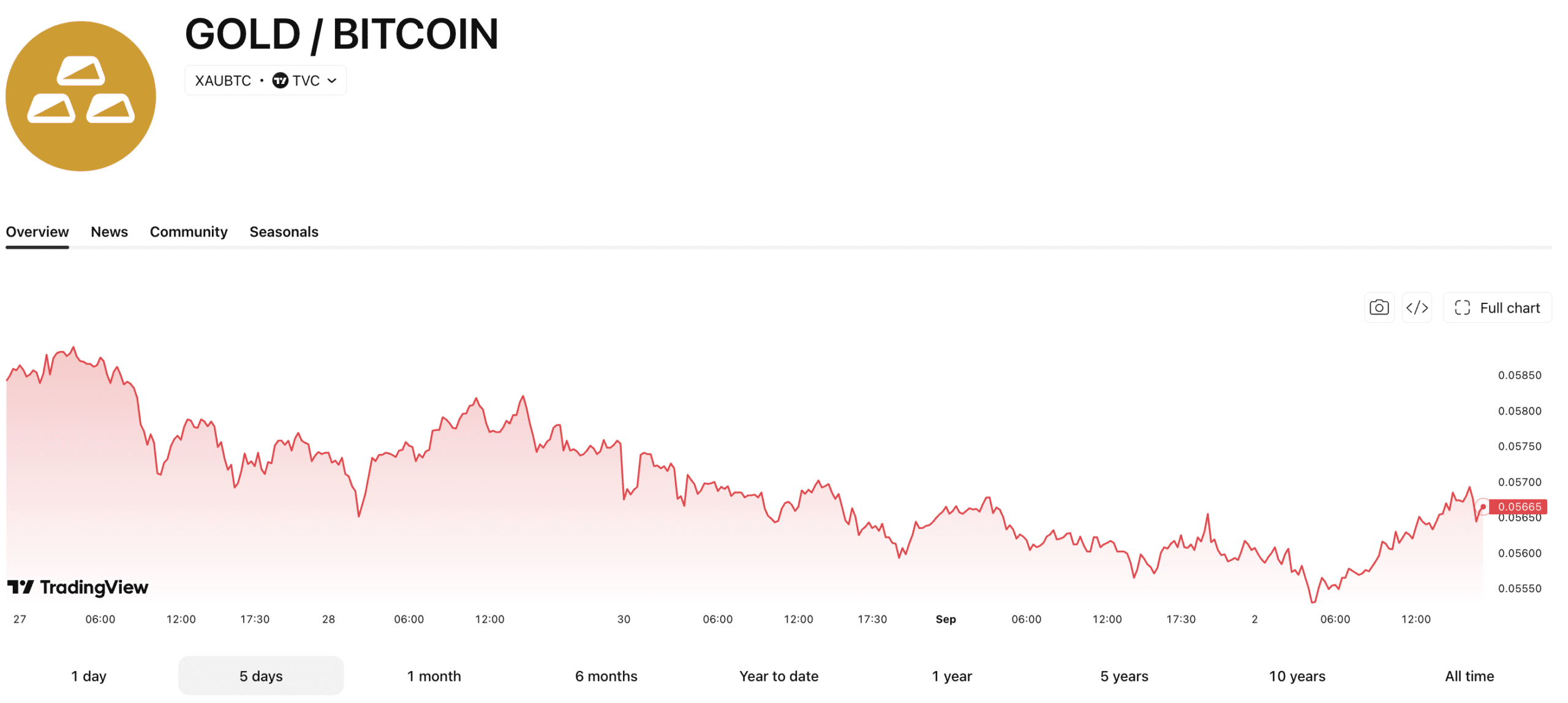
(SOURCE: TradingView)
Mechanism Breakdown: Oil, Yields and the Dollar Squeeze
Higher oil prices are increasing inflationary pressures, limiting the Federal Reserve’s ability to cut rates. Meanwhile, rising long-term government yields, driven by fiscal concerns rather than growth optimism, are tightening financial conditions, influencing the U.S. 10-year yield, which has reached 4.81%.
This situation has led to a decline in the S&P 500 and pressure on Asian stocks amid heightened macro risks for energy-importing economies. In this context, Bitcoin’s response after a roughly 3% drop to just under $77,000 has been lackluster, fluctuating between $76,000 and $80,000.
Some analysts suggest that yields driven by fiscal issues could be increasing demand for hard assets like Bitcoin, which exists outside the fiat system. Prior coverage has noted Bitcoin’s sensitivity to rate-hike expectations and related episodes of ETF outflows.
$CL $WTI $USOIL
Oil is following the mapped path so far. ✅
Still targeting $101.50 – $106.
Lower after.Bulls flipped the trendline of the March high and price is now trading above all the major SMAs and EMA again.
Last time I said to watch $91.28.
Right now we see the… https://t.co/TAZk7h1zgy pic.twitter.com/Hdulb7vYjY— Market Wave Investor (@MWi_EW) September 2, 2026
Gold’s Slide Complicates the Safe-Haven Story, as Bitcoin Shines
The clean rotation-into-hard-assets thesis runs into a problem: gold has not participated. The metal fell sharply from $4,700 per ounce to $4,300 in less than a week, even as fiscal and inflation concerns intensified, according to CoinGecko data.
That decline undercuts any simple claim that capital is fleeing fiat-adjacent risk broadly into stores of value. Bitcoin’s steadiness during a period when gold, stocks and bonds are all under pressure supports a relative-resilience framing.
However, it does not establish that Bitcoin has decoupled from risk assets or that specific ETF or spot flows are driving the stability — the primary source does not provide flow data to make that case.
A separate look at how gold-linked funds have performed alongside Bitcoin ETFs offers useful context for how the two asset classes have diverged during past periods of volatility.
The Dollar Is the Variable That Decides the Next Move
The bull case for Bitcoin hinges on its ability to hold steady amid $90 oil, a 4.81% 10-year yield, and declining gold and equities, suggesting it’s absorbing macro stress rather than lagging behind.
Conversely, the bear case centers on the US dollar’s strength, particularly as the Dollar Index approaches a long-term bullish trendline dating back to 2011, with a potential bounce increasing dollar demand and negatively impacting Bitcoin due to their historical inverse correlation.
Key signals to monitor include whether Bitcoin can maintain the $76,000-$80,000 range, whether WTI and long-duration yields continue to rise, and whether the Dollar Index confirms a bounce off the 2011 trendline. The outcomes will reveal if Bitcoin’s current stability is due to genuine resilience or simply a delayed reaction to existing pressures in other markets.
EXPLORE: Trade Crypto on Kraken Today
Bitcoin Hyper Targets Early Mover Upside as Ethereum Tests Key Levels
BitMine’s buying validates the long-term ETH thesis, but at a $14.63Bn treasury and a market cap already pricing in institutional demand, the asymmetric upside has largely been claimed.
Traders chasing a repeat of ETH’s early accumulation phase are looking earlier in the cycle, toward Bitcoin’s own infrastructure buildout.
Bitcoin Hyper ($HYPER)is positioning as the first Bitcoin Layer 2 with Solana Virtual Machine (SVM) integration, targeting execution speeds faster than Solana itself while settling back to Bitcoin’s base-layer security.
The presale has raised $33,092,631.38 at a token price of $0.0136855, with staking rewards offered at an unspecified but reportedly high annual percentage yield (APY).
Its Decentralized Canonical Bridge aims to solve Bitcoin’s long-standing programmability gap, slow transaction speeds, high fees, and lack of native smart contracts.
Don’t Miss Out Again: Join New Bitcoin Layer 2 Early Here
DISCOVER: Best Meme Coins to Buy in 2026
next
Disclaimer: Coinspeaker is committed to providing unbiased and transparent reporting. This article aims to deliver accurate and timely information but should not be taken as financial or investment advice. Since market conditions can change rapidly, we encourage you to verify information on your own and consult with a professional before making any decisions based on this content.

Daniel Frances is a technical writer and Web3 educator specializing in macroeconomics and DeFi mechanics. A crypto native since 2017, Daniel leverages his background in on-chain analytics to author evidence-based reports and deep-dive guides. He holds certifications from The Blockchain Council, and is dedicated to providing “information gain” that cuts through market hype to find real-world blockchain utility.