

In South Korea crypto news, the five largest won-based exchanges, Upbit, Bithumb, Coinone, Korbit, and Gopax, sent 2.76 trillion won in stablecoins to overseas venues in June 2026 and received 2.20 trillion won back, leaving a net outflow of 560.3 billion won, or approximately $367M, according to data from the Financial Supervisory Service (FSS).
The figure extends an uninterrupted run of net stablecoin outflows stretching back to January 2025, now 18 consecutive months. This is not simply a capital flight story; it is a structural indictment of product isolation.
South Korea is losing stablecoins to overseas exchanges!
In June 2026, some 2.7625 trillion won worth of stablecoin was sent from South Korea’s top 5 CEXs to overseas exchanges.
After inflows, this accounted for a net loss of some $367M worth of stables.
These outflows have… pic.twitter.com/ep8oJB8IuD
— BSCN (@BSCNews) August 3, 2026
South Korean traders are routing stablecoins offshore not because of market panic, but because the domestic regulatory perimeter makes competing products legally inaccessible at home.
This data drop came as the total crypto market cap sits at $2.22 trillion, down -1.1% over the past 24 hours. Daily trading volume across the market sits at $16.9Bn.
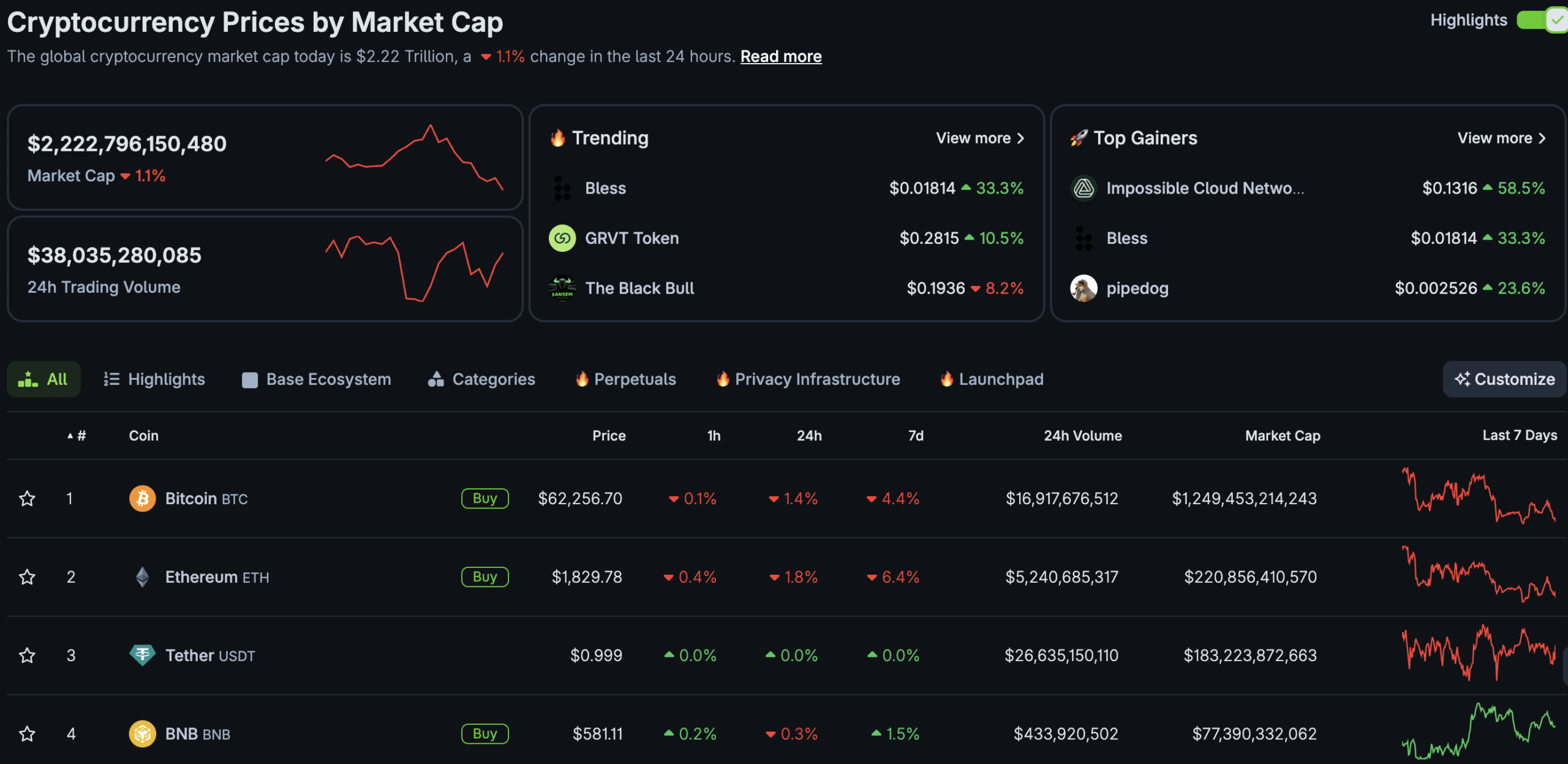
(SOURCE: CoinGecko)
South Korea Crypto Stablecoin Outflows: The Regulatory Gap Driving the Streak
The five domestic platforms in Korea operate under the Specific Financial Information Act, which enforces anti-money laundering measures and restricts access to high-leverage derivatives, DeFi pools, liquid staking, and most RWA protocols.
A Korea Times report on August 2 highlighted that in June, net outflows reached 77.6% of Korean investors’ net purchases of overseas stocks.
In Q2 2026, there were approximately 1.69 trillion won in net stablecoin outflows compared to 1.62 trillion won in net foreign stock sales, indicating that stablecoin outflows may have become a primary channel for retail risk-seeking capital.
The FSS data shows that popular investment categories like crypto derivatives and RWA products are not accessible through Korean-licensed venues.
Offshore platforms such as Binance and Bybit are attracting investors by offering contracts tied to major Korean equities, further pulling retail investors away from domestic options.
EXPLORE: Best Meme Coins to Buy for August
Domestic Exchange Dynamics and the Coinone Shift
🔊 South Korea’s stablecoin outflows are surging.
↳ $10.4B net outflows in 18 straight months
↳ June outflows reached 77.6% of foreign stock purchases | vs 20% last yearOverseas exchanges offering high-leverage Korean stocks are pulling capital out.
Warning sign for local… pic.twitter.com/7aOSOhbFNg
— Crypto Aman (@cryptoamanclub) August 2, 2026
Within the domestic stablecoin market, competitive dynamics have also shifted. Coinone recorded the highest average daily stablecoin trading volume in June at 84.58 billion won, capturing a 34.8 percent share, after introducing zero-fee trading for Circle’s USDC in October 2025.
Bithumb followed at 75.57 billion won (31.1 percent) and Upbit at 73.03 billion won (30.1 percent), per the FSS data cited by the Korea Times. As recently as January 2025, Upbit held a 53.5 percent share and Bithumb 42.5 percent, with Coinone at 1.8 percent.
Those market-share shifts have not reversed the aggregate outflow trend. Coinone’s zero-fee structure appears to have redistributed on-exchange stablecoin volume rather than retained net capital onshore.
Upbit retains dominance in total crypto trading volume; CoinGecko data cited by the Korea Times placed Upbit at 60 percent and Bithumb at 32 percent of average daily volume in June – but the stablecoin segment increasingly functions as a transfer mechanism rather than a trading venue in its own right.
Regulatory Pressure and What Comes Next
In other South Korea crypto news, Rep. Lee, as reported by the Korea Times, urged the government to reevaluate investor protection and supervisory frameworks, emphasizing the need for improved regulations.
Lawmakers raised concerns about Korean retail investors facing ultra-high-leverage products on offshore platforms lacking domestic protections, as well as the implications of stablecoin flows outside traditional oversight.
Discussions have included won-pegged stablecoins and frameworks for security token offerings and institutional custody, although no specific legislative timeline has been established.
The ongoing challenges appear tied to the breadth of product offerings rather than capital controls, necessitating simultaneous regulatory updates across derivatives, DeFi, and staking.
Until Korean-licensed platforms can match the product suite of global decentralized networks and offshore exchanges, the incentive to route stablecoins offshore will continue, regardless of bitcoin’s trends. The June data reflects a trend that seems persistently established.
DISCOVER: Best Meme Coins to Buy in 2026
next
Disclaimer: Coinspeaker is committed to providing unbiased and transparent reporting. This article aims to deliver accurate and timely information but should not be taken as financial or investment advice. Since market conditions can change rapidly, we encourage you to verify information on your own and consult with a professional before making any decisions based on this content.

Daniel Frances is a technical writer and Web3 educator specializing in macroeconomics and DeFi mechanics. A crypto native since 2017, Daniel leverages his background in on-chain analytics to author evidence-based reports and deep-dive guides. He holds certifications from The Blockchain Council, and is dedicated to providing “information gain” that cuts through market hype to find real-world blockchain utility.