
You wake up to a message from your operations lead. A bridge key got popped overnight, funds drained, and support channels lighting up. You don’t use that bridge, but the question stings anyway: would your setup have survived the same hit?
Two weeks earlier, an exchange you considered for overflow balances shut down with withdrawals under manual review and a vague note about timing. Your board asks for a custody memo by Friday. It needs to be simple, practical, and hard to poke holes in.
That’s the job today: cut through the labels, map the trade-offs, and build a custody stack you can defend when something breaks at 3 a.m.
Custody is no longer a back-office box to tick. It’s front and center because the attack surface has grown and the rulebook is catching up. In July 2026, Europe’s markets regulator launched a coordinated review of crypto firms’ operational resilience with a specific focus on custody. The exercise runs into 2027 and ends with a public report. That’s a big signal: custody is where supervisors will push hardest next (European Securities and Markets Authority (ESMA) press release).
The market’s convenience bias pulled assets into hot paths; regulators and loss events are now forcing a swing back toward controlled latency and verifiable segregation.
We’re also seeing both sides of the custody coin in real time. On one end, an operator-run bridge on Arbitrum tied to AFX Trade was drained of about 24.15 million USDC after attackers compromised hot validator keys, then moved the funds to Ethereum and swapped into ETH. That’s the purest hot-key risk there is (CoinDesk (reports Blockaid/chain analysis)).
On the other end, centralized venue risk hasn’t gone away. AscendEX ceased operations effective July 1, 2026, paused automated withdrawals, and shifted to manual review, warning it couldn’t assure timing or amounts. Even for users eventually made whole, that kind of freeze can break a trading or treasury plan in a day (The Block (reports AscendEX notice)).
Meanwhile, big names are leaning into security R&D. A group including BlackRock, Coinbase, Fidelity Digital Assets, and others formed the Bitcoin Security Consortium in July 2026, pledging $15 million across three years for Bitcoin security and post-quantum work. That’s not custody per se, but advances here tend to trickle down into wallet design and standards that custodians adopt (Businesswire (via markets.financialcontent) / press release reporting).
What hot, cold, and qualified custody really mean
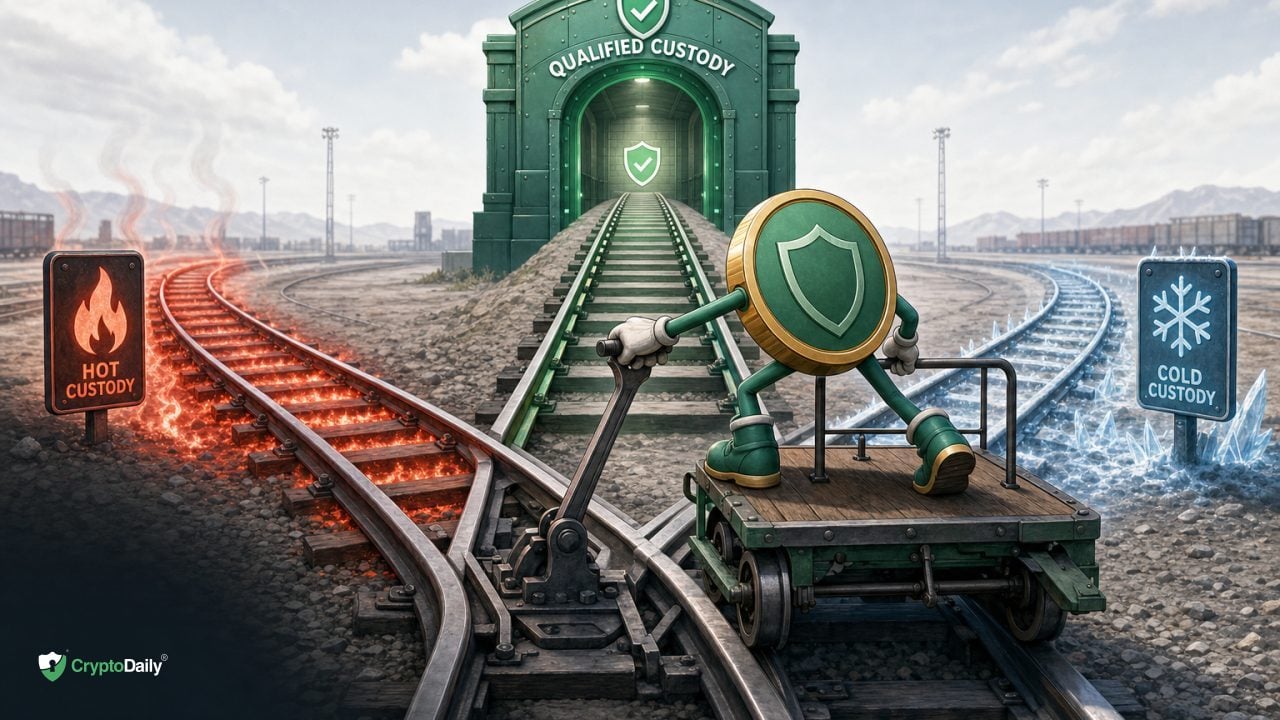
Forget the buzzwords for a second. These terms describe how close your private keys are to the internet and what legal wrapper sits around them.
Hot wallets: speed with strings attached
Hot means the signing key (or a portion of it) can authorize transactions from an online environment. That gives you instant settlement, market access, and automation. It also puts a bullseye on your infrastructure. Think exchange deposit/withdrawal systems, DeFi market makers, retail apps.
Cold storage: isolation as a feature
Cold keeps the signing process offline. Approvals are batched. Workflows are slower, sometimes intentionally clunky. The upside is dramatically reduced remote attack surface. True cold often uses air-gapped devices, controlled rooms, and human approvals.
Qualified custody: the legal shield
Qualified custody refers to placing assets with a regulated entity authorized to hold client property under a specific legal framework, typically a bank or trust company in some jurisdictions. The idea: enforceable segregation, bankruptcy-remote structures, and auditability. It’s not a guarantee against loss, but it’s a legal posture with recourse that an operating exchange wallet usually can’t match.
| Custody type | Key location | Speed | Attack surface | Typical users | Common controls |
|---|---|---|---|---|---|
| Hot | Online (server/HSM/MPC) | Seconds–minutes | Highest | Exchanges, traders, dApps | Rate limits, spend limits, real-time monitoring |
| Warm | Partially online (MPC, staged) | Minutes–hours | Moderate | Funds with periodic rebalancing | Threshold signing, approvals, circuit breakers |
| Cold | Offline (air-gapped) | Hours–days | Lowest (remote) | Treasuries, long-term holders | Physical controls, 4-eyes, offline policies |
| Qualified custodian | Varies (hot/warm/cold tiers) | Tiered by SLA | Varies, with legal segregation | Institutions, funds, corporates | Regulatory oversight, audits, SOC/ISO, insurance |
How keys move: from request to settled transaction
You don’t need to be a cryptographer. But you do need to know how a withdrawal actually travels from “approved” to “confirmed.” Here’s a typical cold-to-hot workflow for a fund.
- Portfolio manager requests a withdrawal from cold to a pre-approved hot address with a reason code.
- Operations verifies balances, whitelist entries, and compliance flags; kicks off a policy check.
- Two or more approvers sign off in the custody system (4-eyes or quorum policy).
- A transaction is assembled offline; keys are brought to an air-gapped device or HSM enclave.
- Signatures are produced (via multisig or MPC) and exported over a controlled channel (QR, removable media, or secure relay).
- The signed payload is broadcast from an online relay; monitoring begins.
- Settlement is confirmed; reconciliation and immutable logs are updated; risk limits reset.
Multisig vs MPC in the real world
Multisig spreads control across multiple keys and often shows up clearly on-chain for chains like Bitcoin. MPC splits a single logical key across multiple devices or parties and can look like a single address on-chain. Both support quorum policies. Your choice is mostly about vendor neutrality, chain support, and operational comfort. Many qualified custodians offer both.
Where HSMs and KMS fit
Hardware security modules and key management services protect key material at rest and in use. They’re not magic shields. You still need policies around who can trigger a signing job, how code changes are reviewed, and how you test disaster recovery.
Exchange wallets vs third-party custodians vs self-custody
Most teams end up with a mix. But each bucket behaves very differently when stress hits.
Exchange custody: convenience with counterparty exposure
Exchanges are fast and liquid. They’re also business entities with their own risks. The AscendEX shutdown in July 2026, and the shift to manual withdrawals with no timing assurances, is a reminder that even routine operations can freeze without notice (The Block (reports AscendEX notice)).
Third-party qualified custodians: legal rails and segregation
Putting assets with a qualified custodian can provide clearer segregation and a bankruptcy-remote setup in some jurisdictions. You trade a bit of immediacy for process and paper trails. For many institutions, that’s the point.
Self-custody: maximal control, maximal responsibility
Running your own stack means you own every sharp edge: hiring, secure facilities, HR controls, audit, key ceremonies, vendor risk, and continuity. If it’s your comparative advantage, great. If not, partner up or limit it to the hot layer for operational agility.
The 2026 rulebook and industry moves you should watch
Regulators are getting specific about operational resilience. The EU’s securities watchdog launched a Common Supervisory Action in July 2026 laser-focused on custody processes and digital resilience across crypto-asset service providers, with findings due in H2 2027 (European Securities and Markets Authority (ESMA) press release). Expect questions on segregation, incident response, vendor dependencies, and data integrity.
What regulators usually probe
- Client asset segregation and reconciliations you can actually evidence
- Incident timelines: detection, containment, notifications
- Key ceremonies, change control, and dual-control enforcement
- Business continuity: restore times, backup testing, and failovers
- Third-party service dependencies and exit plans
Industry self-help
Security-focused initiatives matter as much as rules. The Bitcoin Security Consortium’s funding for core and post-quantum research is a reminder that baseline cryptography and wallet standards are living things. Improvements here often become tomorrow’s custodian requirements (Businesswire (via markets.financialcontent) / press release reporting).
Bridge and L2 exposure is on the checklist now
If you use cross-chain routes or run on L2s, expect direct scrutiny. The AFX Trade exploit on Arbitrum was a textbook hot-key validator failure at the bridge layer, with funds quickly swapped post-drain. Supervisors will want to know your hot-key protections, monitoring, and circuit breakers (CoinDesk (reports Blockaid/chain analysis)).
Building a custody stack you can defend
Think in tiers, not absolutes. Design for constrained speed where you need it and heavy friction where you don’t.
Segment balances with policy, not vibes
- Hot: operational float sized to 1–3 days of expected activity, capped by per-asset spend limits.
- Warm: threshold signatures and time-locked approvals for weekly rebalances.
- Cold: offline, quarterly access cadence unless a break-glass event triggers more.
Pick a governance model you’ll actually enforce
- Define named approvers, backups, and rotation schedules.
- Tie every signing flow to ticketed requests with reason codes.
- Ship immutable logs to a write-once store you don’t admin.
Vendor due diligence without the theater
- Evidence of segregation and legal ownership. Ask for sample account statements and how they reconcile on-chain balances.
- Reports you understand (e.g., SOC 2 Type II, ISO 27001) and what scope they actually cover.
- Disaster-recovery drill cadence and the last time they restored from cold backups.
- Key compromise runbook: who does what in the first hour.
Bridges and L2s: treat them as separate risk buckets
- Limit bridge exposures, set per-route caps, and prefer routes with independent validators and public monitoring.
- Use allow-lists for destination contracts and trigger human review above thresholds.
Costs, SLAs, and the questions that save you later
Pricing varies. Some custodians charge basis points on assets, others prefer flat fees plus per-withdrawal charges. Don’t optimize for the last basis point and miss the bigger risks.
Ask these out loud
- What’s the withdrawal SLA from each tier (hot, warm, cold) and how is it enforced during an incident?
- Where is key material physically and legally located? What jurisdictions have reach?
- How are client assets segregated on-chain and on the balance sheet? Show me the ledger.
- What happens if your cloud provider is down? Walk me through a day-two recovery.
- What are your spend limits, velocity checks, and anomaly alerts on hot paths?
- How do you audit smart-contract risk for supported tokens and chains?
- Insurance: what’s covered, what’s excluded, and who gets paid.
Risks & What Could Go Wrong
- Hot-key compromise on bridges, validators, or exchange hot wallets leading to rapid drains, as seen in July 2026 with AFX Trade’s bridge route.
- Counterparty failure or shutdown at a venue, freezing withdrawals or forcing manual queues, exemplified by the AscendEX wind-down.
- Poor segregation where client assets co-mingle with operating balances, complicating recovery in a bankruptcy.
- Smart-contract bugs in custody-integrated tooling (wrappers, token standards, or vault contracts).
- Jurisdictional actions or freeze orders creating legal, not technical, lockups.
- Human error in key ceremonies, backups, or policy configuration.
- Incomplete insurance that excludes social engineering, insider fraud, or contract exploits.
Most blow-ups aren’t exotic cryptography failures; they’re policy gaps meeting rushed operations on an internet-connected key path.
If you want a steady read on custody incidents and regulatory moves without the noise, I keep an eye on coverage at Crypto Daily. It’s useful to cross-check vendor claims against what actually broke for someone else last week.
Frequently Asked Questions
What is a qualified custodian in crypto?
It’s a regulated entity authorized to hold client assets under a legal framework designed for safekeeping, typically a bank or trust company in some jurisdictions. The benefit isn’t magical security; it’s enforceable segregation, audit trails, and clearer recourse if things go wrong. Many qualified custodians still use hot, warm, and cold tiers internally.
How is cold storage different from just using a hardware wallet?
Cold storage is a process, not a device. A true cold setup is air-gapped, scripted, physically controlled, and logged, with multi-person approvals and rehearsed restores. A single hardware wallet is just one tool and can still be used in ways that aren’t truly offline or well-governed.
How much should we keep in hot wallets?
Only what you need for a defined period of normal operations, often sized to a few days of activity with hard spend and velocity caps. The exact number depends on your trading cadence, on-chain fees, and how fast you can move from warm or cold during a spike.
Is MPC safer than multisig?
They solve similar problems with different trade-offs. Multisig is simple and transparent on chains that support it natively. MPC keeps quorum logic off-chain and can be more portable across assets. Security hinges on implementation, policy, and monitoring more than the label.
Do custodians insure assets?
Some do, but coverage varies and often excludes smart-contract exploits, social engineering, or certain insider events. Always ask for the policy, the limits per incident, exclusions, and who the beneficiary is. Insurance is a backstop, not your primary control.
What happens if our custodian or exchange goes down?
With a qualified custodian, the aim is legal segregation and an orderly process to return client assets. With exchanges, you’re exposed to their business risk and any freeze in operations. Either way, you need exit plans, including alternative venues and documented procedures to move assets.
Are bridges and L2s safe enough for treasury?
They can be, but treat them as separate risk domains with caps and approvals. The July 2026 AFX Trade incident was a hot-key validator issue, not a bug in a token. Your mitigations should match that class of risk: key isolation, monitoring, and circuit breakers.
Disclaimer: This article is provided for informational purposes only. It is not offered or intended to be used as legal, tax, investment, financial, or other advice.