


According to well-known blockchain sleuth, ZachXBT, there had been large transfers and fast market sales which pushed LAB’s prices sharply lower this week. The blockchain sleuth posted on X and stated that on July 13, an entity moved about 17.9 million LAB, roughly $7.2 million at the time, from Bitget into a KuCoin deposit address. Minutes later, 5 million of those tokens were withdrawn from KuCoin and routed through a wallet that sold into Aster’s spot market, triggering a steep short-term slide.
The quick dump on Aster briefly knocked LAB from around $0.34 to about $0.22, erasing roughly 35% of value in a small window. The remainder of the July 13 transfer is still sitting in KuCoin wallets, suggesting more selling capacity may be available if the holder chooses to push more supply onto exchanges.
Further movements were spotted later the same day when about 30 million LAB (approximately $8.3 million) moved from a Bitget hot wallet to another KuCoin deposit address. Analysts tracking the chain said the transfers looked like the actor altered its routing, possibly to obscure the funding origin and make tracing harder.
Market Picture and Price Action
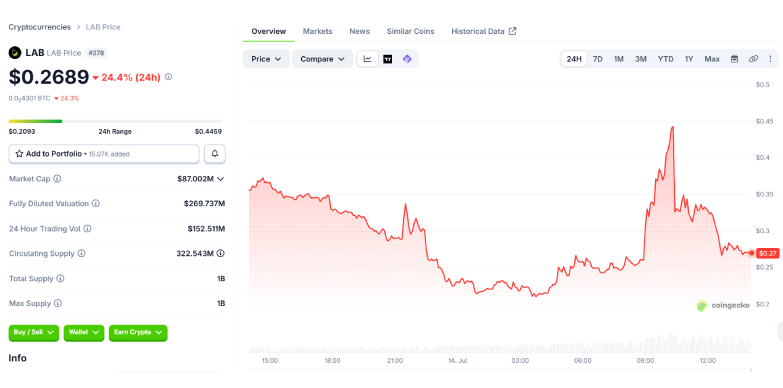
LAB’s price has been volatile. As per the data presented by CoinGecko, at press time, the price of the token stands at $0.2689 with a drop of 24.4% in the last 24-hours. This collapse has come from a high of about $16.1 roughly a week earlier. The combination of large exchange deposits and concentrated sales on thinner spot venues like Aster amplified price swings, creating sharp drop moments that spooked traders.
Why Large Transfers Matter
When big batches of tokens land on exchanges, they increase the immediate sellable supply. If these tokens are dumped quickly to markets with limited liquidity, prices can tank fast. This is what observers saw with the Aster sales: concentrated selling pressure on a smaller order book produced outsized movement compared with larger exchanges.
The fact that substantial LAB balances remain in KuCoin wallets adds pressure. Even if these tokens are not sold right away, their presence on the exchange addresses still tends to weigh on sentiment because traders fear further dumps. The chain analyst who flagged the moves suggested the actor might be trying to hide where the tokens originally came from, swapping transfer paths and deposit addresses to frustrate tracing efforts.
ZachXBT’s Earlier Findings
ZachXBT’s earlier finding painted LAB as a project with hidden supply and heavy insider influence rather than a broad, retail-driven market. In his investigation (that he posted on X), he said the token’s rise to a multi-billion-dollar valuation was supported by opaque private loans, OTC deals, and wallet activity that suggested a small group controlled most of the circulating supply. He also pointed to documents and screenshots showing that LAB’s public sale terms were changed after launch, including a longer vesting cliff, which meant buyers may not have had a clear picture of when tokens could actually move.
He further argued that the token’s float was unusually unclear because major tracking sites and the project’s own materials gave different or incomplete supply data. Onchain tracing then linked large token movements to exchange deposit addresses, market-maker activity, and wallets tied to insiders, which made the selling pressure look less like normal trading and more like coordinated distribution.
ZachXBT also said some LAB-related wallets were connected to earlier project activity, personal exchange accounts, and private loan contracts, adding to his view that business and personal funds were being mixed in ways that were hard for retail users to see.
The big takeaway was simple: ZachXBT believed LAB’s market structure was built on information asymmetry. Team insiders, lenders, OTC buyers and market makers appeared to know the real unlocks and supply flows, while ordinary traders only saw the price chart.