

Given the manner in which the OfS conceived of and carried out its duties in relation to Sussex’s conditions of registration (E1), it is perhaps unsurprising that it reached the Final Decision that it did. However, this does not augur well for how it is going to conceive of and carry out its duties under the Higher Education (Freedom of Speech) Act.
The absolutist nexus
The origins of the Act lie in frequently wildly distorted and highly inaccurate press stories about the way in which “cancel culture” allegedly operates in British universities. Many of these emanated from the leading culture war lobbyist Policy Exchange (here and here), thence making their way immediately and unfiltered into the right-wing press echo chamber and from there directly into the White Paper Higher Education: Free Speech and Academic Freedom (2021), which formed the basis of the Act. Few things could illustrate more clearly than this process of osmosis the workings of the Tory government/Tory press/Tufton Street nexus, something which one of the co-authors of the Policy Exchange reports, Eric Kaufmann, openly boasted about.
In the Foreword to the White Paper, the then education secretary Gavin Williamson observed that “there are some in our society who prioritise ‘emotional safety’ over free speech’” and complained of “the rise of intolerance and ‘cancel culture’ upon our campuses” and a “creeping culture of censorship”. Without citing any evidence he alleged that:
Codes or statements have been introduced that would limit free speech, and some students’ unions have been granted inappropriate levels of control over which speakers can visit and how student societies can operate. Schemes have been established in which students are paid to report others for perceived offences. Academics have been pressured to adjust their reading lists for ideological reasons.
The White Paper itself states:
There is a growing body of evidence citing a “chilling effect” on staff and students, domestic and international, who may feel unable to express their cultural, religious or political views without fear of repercussion – suggesting that the space for free speech at universities, often contested and febrile, may be becoming constrained.
However, the “evidence” cited is, as noted above, vitiated by coming from distinctly tainted and partisan sources and is a classic example of policy-driven “evidence” which of course fails to result in evidence-driven policy. Significantly in the present context, “chilling” is mentioned no less than eight times in the course of the White Paper’s 40-pages, which actually contain a subsection entitled “A Chilling Effect on Campus”.
The free speech tsar
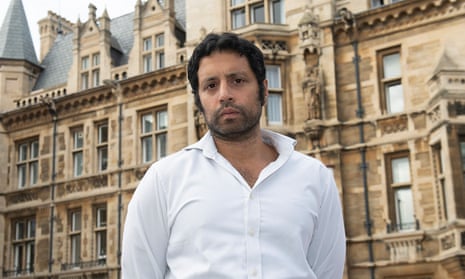
A Director for Free Speech and Academic Freedom was established within the OfS in order to oversee the implementation of the Higher Education Freedom of Speech Act, and the occupant of the post inevitably came to be known as the free speech tsar. The Cambridge philosopher Arif Ahmed was appointed to the position in June 2023. Before he took up the post, Ahmed had served on the advisory council of the FSU and had consistently voiced unqualified support for the absolutist conception of freedom of expression. (Of course, only a cynic would claim that this is exactly why he got the job).
For example, he had led a successful campaign at Cambridge to reject the university adopting a free speech policy that required staff and students to be “respectful” of differing views and diverse identities, instead of requiring them simply to be “tolerant” of these. In a piece in Spiked he celebrated his role in reversing a decision to disinvite Jordan Peterson from speaking at Cambridge on the grounds that “we wanted anyone whom any academic saw fit to invite to be able to visit”. And in another article in Spiked he congratulated himself on being involved in Cambridge rolling back a policy on various “microaggressions” which led him to complain that “our universities are very keen on restricting speech. This is partly because universities prefer to see themselves as social-justice factories rather than seats of learning”. And in an article in Index on Censorship he complained of “the wholesale censorship, by a mob, of a legitimate and important point of view on a matter of public interest” and accused the Sussex authorities of failing to support Stock until far too late. Sussex is also mentioned specifically in Ahmed’s contribution to the Politeia collection Freedom to Think, Freedom to Speak: Why UK Universities must Change Course in which he argued that although Stock’s gender-critical beliefs “constitute a legally protected characteristic, her employer seems to have permitted the harassment to continue, and to escalate, for three years”.
The judgment in Sussex’s appeal (375-93) referred to correspondence between Ahmed and Stock that took place before the former was appointed to the OfS in which the pair had warmly complimented, congratulated and endorsed each other and referred to the non-binary US academic, Professor Quill Kukla of Georgetown University, as “that lunatic” (384). He also voiced some interesting views about Cambridge students and faculty members, stating that:
Hearing you speak and meeting you, would be an inspiration to many of the philosophy students here in Cambridge. It is the undergrads here who are especially subject to, and on account of youth and immaturity, especially ill-equipped to resist, peer pressure to have the right thoughts on these matters. After three years of this pressure, although at first they only conform outwardly, unless there is some counter-weight they will end up in the Khmer Rouge themselves. And so many of the staff here are either spineless or complicit, when what students especially really need is articulate, intelligent resistance to Groupthink. (383)
However, what is particularly significant in the present context is Ahmed’s negative remarks about Sussex specifically, to the effect that he was “pleased to see that Sussex has ‘zero tolerance’ for all forms of harassment and bullying, unless of course it is of people like you” (378) and “I can’t imagine how Sussex stumbled along for 60 years without a PVC for culture, diversity and inclusion” (381).
All this negativity towards Sussex notwithstanding, Ahmed joined the OfS investigation team on 15 October 2024, in effect leading it, subject to Susan Lapworth’s oversight. Lieven J notes that “although he is not formally described as head of the team, Ms Lapworth says he was acting on her behalf to ‘step in for me and shepherd the case to its conclusion’ (50). However, she cleared Ahmed of influencing the Final Decision, on the grounds that “the die had already been well cast by then” (425), but she also added that “if Dr Ahmed had been the decision-maker I would in all probability have found that he had predetermined the decision by reason of having a closed mind” (424).
As Jim Dickinson has argued on the higher education blog Wonkhe, which is an invaluable source of information on this case (and much else besides), the Sussex decision is a considerable setback for the free speech absolutists. Which is, course, why the Telegraph, 29 April, headlined its article on the case by its education editor “Kathleen Stock’s Ex-university Overturns £500k Fine in Blow for Free Speech” and gave Lord Young of Acton, the general secretary of the FSU, considerable uncontested space to opine that:
This is a terrible judgement which effectively renders the Higher Education (Freedom of Speech) Act toothless. It sends a message to universities that they only need to pay lip service to the new free speech duties in the Act and not actually do anything concrete to uphold academic freedom and free speech on campus. The judge has effectively hung Kathleen Stock out to dry and given a green light to trans activists to hound off campus anyone they disagree with. We very much hope the Office for Students appeals and if it does we hope to intervene [as of course it did in Sussex’s application for judicial review of the OfS’s action].
Universities as the problem
However, as the above reactions make clear, although the High Court rejected the absolutist position, the FSU/Policy Exchange/OfS/Tory press coalition that produced it most certainly has not done so. As Dickinson states:
What that coalition has consistently worked to keep out of view is proportionality – the legal hinge where free speech meets the parallel duties universities owe to those targeted by speech. Their preferred frame is that universities are the problem and regulators exist to stop them being so. Anything that looks like balancing is treated as the woke administrative class manufacturing reasons to avoid muscular enforcement.
Parallel duties frequently relate to protecting people from harassment of one kind or another under, for example, the Equality Act 2010, the Public Sector Equality Duty which is part of that Act, the Worker Protection Act 2023 and indeed condition E6 of OfS’s own regulatory framework. Providing such protection may sometimes require universities to restrict speech that is itself within the law. This is not a case of, as the absolutists and culture warriors would have it, “cancelling” lecturers or visiting speakers whose views are not sufficiently “woke”, but of putting constraints on conduct directed at a colleague, student or category of people in the form of speech which the university judges to be harmful to them. However, the absolutist position entails that any policy capable of capturing lawful speech is, ipso facto, unlawful. As Dickinson puts it:
Read in that frame, Article 10(2) becomes a loophole rather than a Convention provision. Equality or harassment duties become alibis rather than statutory obligations. Sussex’s Safeguarding Statement becomes the institution sneaking restriction in under cover of process, rather than proportionality safeguarding. The absolutist read is what you get when you translate an ideological worldview into a regulatory test.
As noted earlier, the OfS does take into account Article 10(2) in the most recent iteration of its Regulatory Advice 24: Guidance Related to Freedom of Speech. But it does so in a grudgingly negative way, relegating it to the last of its three steps for assessing compliance with universities’ duties to secure freedom of speech within the law and pointedly highlighting the difficulty involved in restricting lawful speech if its particular modus operandi is followed:
The proportionality test is formulated such that there is a high bar to interfere with any qualified Convention rights, including Article 10 on freedom of expression. In practice this means it is difficult to restrict lawful speech. This is particularly so in a higher education context, where providers are subject to statutory duties to secure the rights protected under Article 10, and where the core mission of universities and colleges is the pursuit of knowledge (and the principles of free speech and academic freedom are fundamental to this purpose).
The Guidance contains 54 “concrete examples of steps to secure freedom of speech that are likely to be reasonably practicable in a wide range of circumstances”. But as Dickinson has noted in a further article, particularly in light of the outcome of the Sussex appeal, several of these “seem to model the wrong reasoning, moving too quickly from ‘this policy could restrict lawful speech’ to ‘this is likely a breach’, without showing the whole-framework, proportionality-based analysis the court says is required”. Furthermore, in line with the absolutist assumptions discussed above, almost all of the examples
model institutions getting the balance wrong in one direction – over-restriction, silencing, chilling. Very few model institutions navigating competing obligations sensibly. None model a provider failing students by not acting at all. The implicit working assumption throughout seems to be that providers have a persistent thirst for suppressing speech …. Universities reading RA24 find a document that often seems to assume they are always the problem, rather than one that helps them balance competing legal obligations in good faith. That framing makes it harder, not easier, to get things right.
Julian Petley is the Honorary and Emeritus Professor of Journalism, Brunel University London