
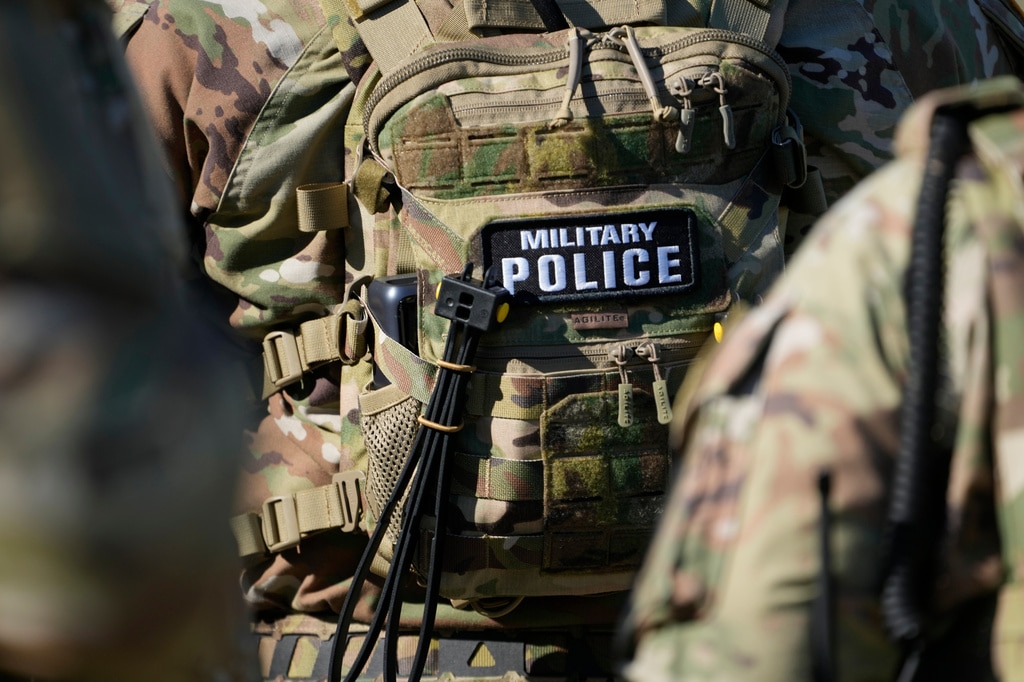
Memphis Safe Task Force agents are engaging in a “startling pattern of retaliation, intimidation, and harassment” against bystanders who record their activities, a federal lawsuit filed by the American Civil Liberties Union alleges.
Filed May 13 on behalf of four Memphis residents who have suffered pushback after observing and documenting the multi-agency law enforcement crackdown, the lawsuit seeks a ruling declaring the agents’ actions violate the First Amendment. The lawsuit is also seeking an order barring Task Force agents from retaliating against people for gathering information or recording task force activities in the future.
The suit also seeks a court order preventing agents from invoking a Tennessee statute giving law enforcement the authority to order observers to stand 25 feet away. The law is frequently used to prevent observers from documenting task force activities, it stated.
“Recording publicly visible law enforcement activity is a core First Amendment right,” said Scarlet Kim, senior staff attorney with the ACLU’s Speech, Privacy, and Technology Project. “Like folks in Minneapolis, Chicago, Los Angeles, and elsewhere across the country, Memphis residents have picked up their phones and cameras to document the massive influx of law enforcement officers into their community.
“In response, the Memphis Safe Task Force has relentlessly subjected these individuals to intimidation, harassment, and retaliation.”
A statement Wednesday from a Department of Justice spokesperson said the agency “will not tolerate any action that puts our law enforcement officers at risk.”
“We strongly disagree with the allegations in the lawsuit and remain committed to fair, impartial, and professional law enforcement practices to keep Memphians and the American people safe,” the statements said, citing more than 9,000 arrests, including 951 known gang members, by the Task Force as “drastically increasing public safety in the Memphis community.”
In a statement received two days after publication of this story, a spokesperson for the Tennessee Highway Patrol cited agency policy to not comment on pending litigation.
“The Tennessee Department of Safety and Homeland Security respects the constitutional rights of all individuals and expects all personnel to perform their duties in accordance with the law, department policy, and professional standards,” the spokesperson wrote.
The task force was created by President Donald Trump in September to bring multiple agencies to combat violent crime in the city, which has seen high rates of crime in the past that had begun to decline before the president’s action.
By October, 2,000 agents from 31 federal agencies, including the Department of Homeland Security, U.S. Marshal’s Service, Immigration and Customs Enforcement and Border Patrol were patrolling the city in cooperation with the Tennessee Highway Patrol. Leaders of each of these agencies are named as defendants in the lawsuit. The Tennessee National Guard is also a Task Force member.
The lawsuit chronicles alleged instances in which agents swerved their cars at observers, boxing them into confined areas, issued threats of arrest in response to being recorded and, in one instance, used excessive force against an observer, according to the plaintiffs.
Agents have aimed bright lights at phones and cameras to try to obscure public filming, taunted observers by name when they arrived at the scene of traffic stops and other public enforcement actions, the lawsuit alleges. Agents have snapped photographs of observers’ faces and license plates, according to the lawsuit.
“Task Force agents are systematically retaliating against, intimidating, and harassing Plaintiffs and others lawfully engaged in these constitutionally protected information-gathering and recording activities,” the lawsuit stated.
Agents have made thousands of arrests, many of them during traffic stops involving a dozen or more agents driving in caravans.
In response, Memphis residents have taken out their phones to record. Volunteer groups such as Vecindarios 901 have organized dispatch systems to quickly send observers to document arrests.
The motivations of the volunteers, the lawsuit said, are “to understand what Task Force agents are doing and share that information with others in their community, to obtain information that will help detained individuals and their family members access support, and to document abuses and ensure future accountability.”
“Whatever their motivation, their activities are unequivocally protected by the First Amendment,” the lawsuit stated.
Agents have also routinely responded to bystander video recordings by invoking a 2025 Tennessee law — commonly referred to a “buffer zone” or “halo” law — that makes it a crime to be within 25 feet of a law enforcement officer after being told to stay back.
Hunter Demster, a Vecindarios co-founder and volunteer, and one of the four plaintiffs in the lawsuit who records task force actions, estimates agents have invoked the law against him on 40 to 50 occasions, preventing him from having a clear vantage point while threatening him with arrest should he disobey the orders, according to the lawsuit.
“Even though Plaintiffs’ information gathering about and recording of Task Force agents in no way impedes, interferes with, or obstructs agents’ execution of their duties — the Halo Law unconstitutionally burdens Plaintiffs’ exercise of their First Amendment rights and undermines public oversight of the Task Force,” the ACLU lawsuit alleges.
Attorneys for the ACLU also accuse Trump administration officials overseeing the task force with adopting an explicit policy of intimidating observers in Tennessee and nationwide.
Federal officials “expressly define gathering information about and recording immigration and law enforcement officers performing their duties in public, including Task Force agents, as threatening, criminal, and even terrorist behavior, warranting government action,” the lawsuit stated.
This article is republished by permission from the Tennessee Lookout under a Creative Commons 4 license.
The Free Speech Center newsletter offers a digest of First Amendment and news-media news every other week. Subscribe for free here: https://bit.ly/3kG9uiJ