TL;DR
- Stellar (XLM) flips XRP in RWA: XLM hits fourth place in Github activity, with $1.4 billion in distributed assets, led by Franklin Templeton, outshining XRPL’s $458 million.
- Shiba Inu coin exchange exodus: 32 billion SHIB withdrawn in 24 hours. Reserves hit 2023 lows as whales move 1.6 trillion tokens to cold storage since early 2026.
- Binance lists Apple: 24/7 trading for Apple (AAPL) futures starts April 6, following $130 billion success with gold and silver.
- The $100 oil trap: Bitcoin slides below $66,000 as rising energy prices kill hopes for Fed rate cuts.
XLM outpaces XRP in RWA: How Stellar became $1.4 billion safe haven
As became known from Sentiment data, Stellar (XLM) has officially taken fourth place globally in developer activity in the real-world asset tokenization sector, with an index of 88.8, allowing the network to surpass most competitors, including XRP Ledger, which shares common roots with XLM through Jed McCaleb.
The figures here speak for themselves. The distributed asset value for Stellar, according to rwa.xyz data, currently stands at $1.410 million, with the main driver being the Franklin Templeton fund, holding a market capitalization of $651 million.
Stellar (XLM) Outpaces Ripple and XRP in RWA Tokenization Race, 32 Billion SHIB Withdrawn as Shiba Inu Coin Exchange Exodus Resumes, Apple Futures Now Live on Binance: Morning Crypto Report
‘Living Rent-Free’: Ripple CEO Fires Back at Avalanche Founder
In addition, the network shows stable growth of 4.45% over the month. XRP Ledger’s distributed value stands at $458 million, with its largest fund, Ondo, holding a capitalization of $221 million, and the network showing a decline of 4.93% over the month.

The only metric where XRP Ledger remains ahead is stablecoins, primarily due to Ripple USD. With a capitalization of $436.22 million in stablecoins, as well as a sharp increase in trading volumes by 75.44%. XRPL remains a more liquid platform for fast speculative positioning.
To summarize, as of April 2, Stellar is officially the choice of banks, with high GitHub activity and a billion-dollar treasury fund making XLM a leader — or, more precisely, one of the leaders — in the RWA sector alongside Hedera, Chainlink and Avalanche, while XRP Ledger currently appears more as a platform for high turnover of stablecoins and tokenization of smaller-scale businesses.
Shiba Inu (SHIB) exchange reserves drop to 2023 lows
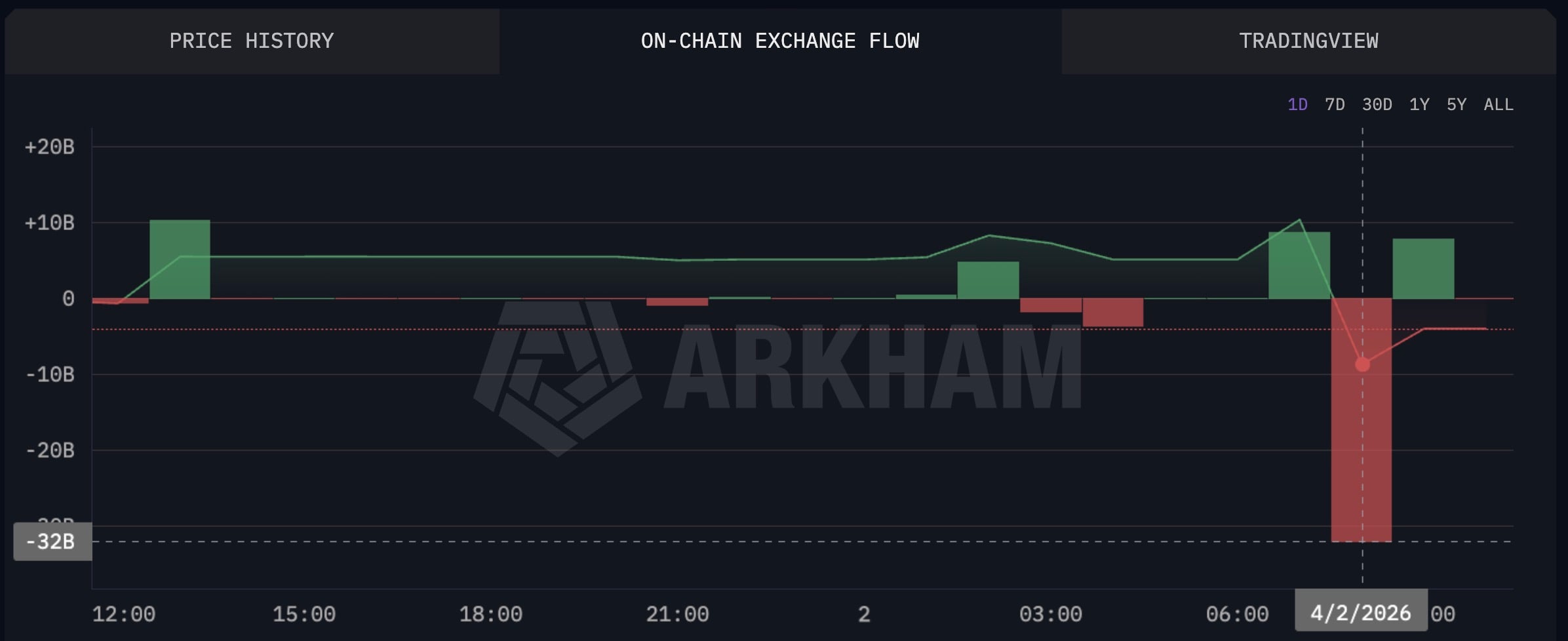
At the same time, the Shiba Inu (SHIB) market has recorded a new wave of large-scale token outflows from centralized exchanges, according to the latest on-chain analytics from Arkham.
Over the past 24 hours, more than 32 billion SHIB have been withdrawn from exchanges, confirming a renewed trend of liquidity moving into private wallets. Earlier it was reported that exchange balances of SHIB dropped to levels last seen in 2023.
Since the beginning of 2026, holdings on major platforms, including Binance and Coinbase, have decreased by more than 1.6 trillion SHIB. Large holders are clearly moving assets into cold storage, which analysts associate with a long-term accumulation strategy and an attempt to reduce immediate selling pressure on the market.
Amid these developments, the SHIB price shows high volatility, in line with the broader crypto market. At the moment, the token is trading around $0.000006 per SHIB.
The current outflow of 32 billion SHIB is only the tip of the iceberg. At the end of March, withdrawals of up to half a trillion tokens per day were already recorded.
On one hand, the reduction of exchange reserves to multiyear lows may precede a parabolic rally; however, given current market conditions, caution remains necessary, and despite bullish on-chain signals, SHIB’s technical trend remains weak, with the price still below key moving averages.
Binance launches Apple stock futures
The world’s largest crypto exchange, Binance, has announced a significant expansion of its derivatives lineup. According to the official announcement, starting April 6, perpetual contracts for Apple stock will become available on Binance Futures.
This move comes amid the rapid convergence of traditional finance and the crypto industry. The launch of futures on Apple, as well as on the QQQ index, S&P 500 ETF and Taiwan Semiconductor shares, reinforces Binance’s position as a platform for round-the-clock trading of global assets.
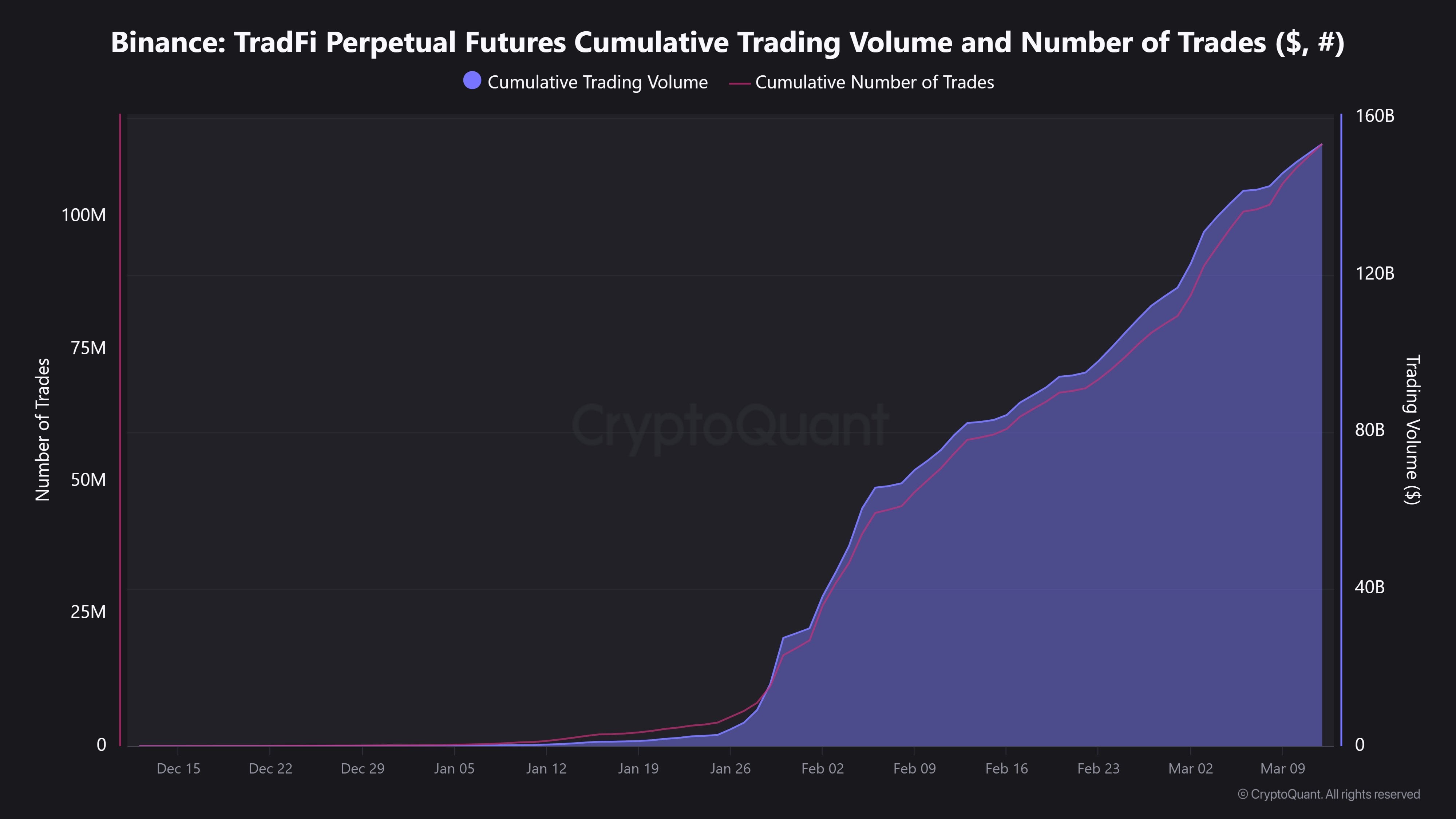
This development has clearly been influenced by competition from Hyperliquid and the multibillion results it achieved after implementing the HIP-3 standard and listing traditional finance instruments.
At the same time, according to a recent report by DL Research, Binance has already become a key platform for 24/7 price discovery of gold and silver. Trading volume in traditional assets on the exchange exceeded $130 billion within just two months after launch, proving strong user demand for such instruments.
Despite funding rate limits set at 2% in both directions, it should be noted that volatility in newly listed equity derivatives on Binance may be elevated at launch.
Crypto Market Outlook: $100 oil trap for Bitcoin
Yesterday’s euphoria on the crypto market was replaced by a sharp reversal. Instead of the expected deescalation, the market received a clear warning for the next two to three weeks, which immediately pressured risk assets. Bitcoin, after testing $69,000, quickly lost more than $3,000 at the start of the new trading session, triggering liquidations of at least $420 million.
The market has returned to a risk-off mode, where defensive instruments such as gold and asset-backed tokens have taken priority amid such key events as:
- Bitcoin is currently trading around $66,000, losing nearly 5% over the past day.
- Oil prices have once again exceeded $100, while the dollar index has strengthened amid current rhetoric, increasing inflation concerns.
- The probability of Federal Reserve rate cuts in the near term is approaching zero. The market now expects a more hawkish stance from regulators due to rising energy prices, meaning additional liquidity injections that typically support Bitcoin are unlikely in the near term.
- Among the upcoming triggers, the anticipated signing of the Clarity Act stands out, which could provide long-awaited regulatory clarity regarding stablecoins and yield generation mechanisms.
The key takeaway is that Bitcoin has firmly confirmed its status as a macro-sensitive asset, acting less as an inflation hedge and more as an indicator of global economic conditions and security. With oil at $100 and global logistics under pressure, the fundamental narrative of digital scarcity, often promoted by Michael Saylor, moves into the background.
You Might Also Like