


The Assam government has tried just about every possible curb on adivasi protests over seizure of their land for a luxury hotel on the boundary of the Kaziranga National Park.
– A ground report by Juheb Hussain*.
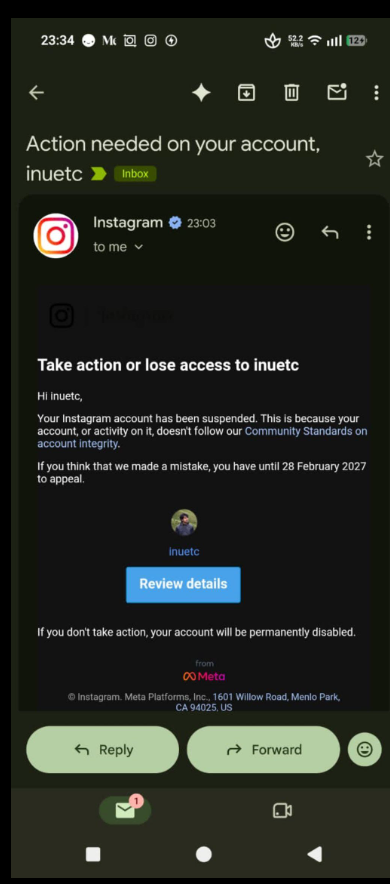
Over several months, the Assam government has set in motion a series of curbs on freedom of expression of protestors who are agitating against a mega luxury project in Kaziranga. The protests have continued, despite the arrest of human rights activist Pranab Doley under the National Security Act (NSA), the detention of indigenous community leaders Amit Nag, Brijit Kutum, Rajib Pegu and Bhaskar Saikia and the takedown of Instagram and Facebook posts, the denial of permission for meetings and continuous surveillance of activists and journalists.
On September 5, activists and members of the Mishing community who assembled under the banner of the Save Kaziranga Movement found themselves locked out of a hall they had booked in Bokakhat town of Assam’s Golaghat district to hold a routine meeting. The venue was later shifted elsewhere .
In a video posted on Instagram, independent journalist Charulata Biswas confronted the police for recording the protestors who were merely standing at the venue and was told it was the job of the police to do so for their own protection!
Since June, protests by members of the Mishing Adivasi community in Inglay Pathar, Kaziranga National Park, over the reduction of the Eco Sensitive Zone (ESZ) from 10 Kms to One Km and the acquisition of their farmland for a luxury hotel next to the wildlife reserve have intensified. In response, the Assam government has weaponised the National Security Act against indigenous community leaders for organising protests.
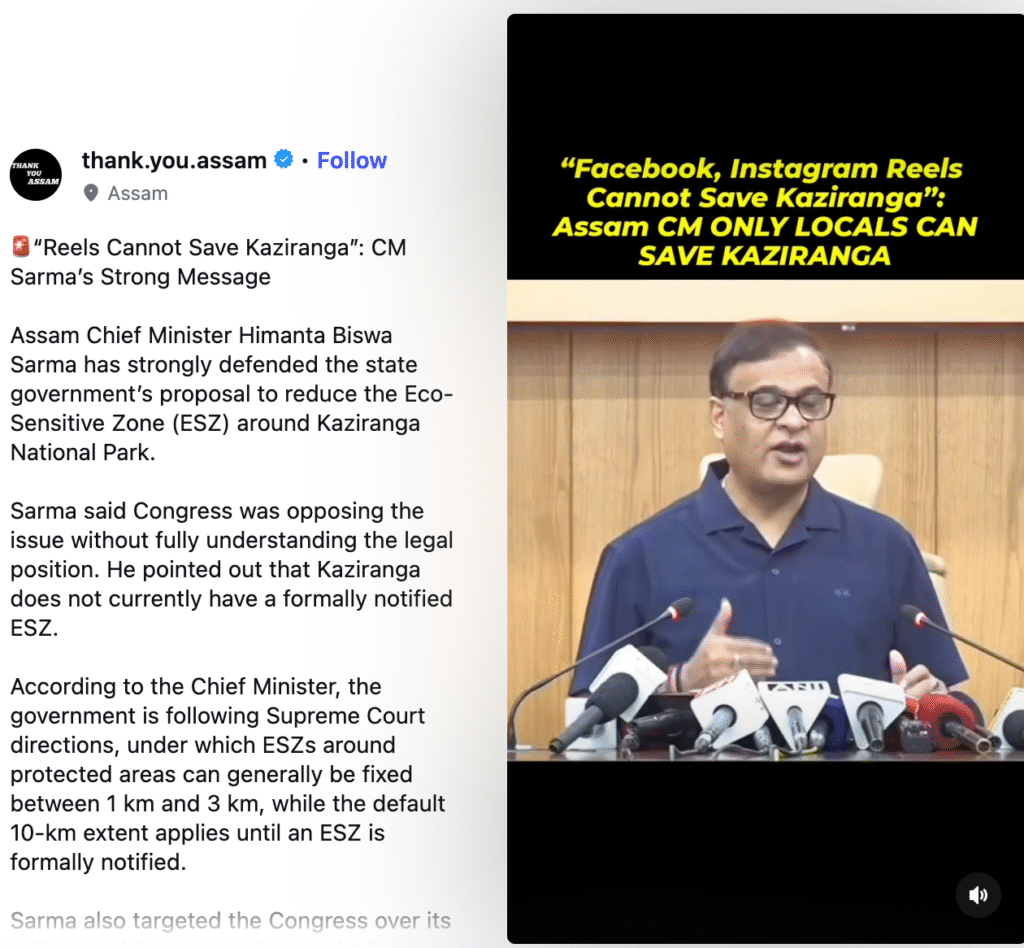
Instagram and Facebook accounts of the popular @Savekaziranga handle, followed by local activists, students and youth, have been blocked or taken down multiple times, only to re-emerge with more followers. Even as they were blocked, Assam Chief Minister Himanta Biswa Sarma was forced to give a back-handed acknowledgement of these accounts but claimed, against all evidence, that the area under dispute did not fall under an ESZ!
The genesis of the present conflict
In 2024, the Assam Government acquired around 20 acres for a luxury hotel project and an Adivasi Heritage museum without the free, prior, and informed consent (FPIC) of the 45 Adivasi families who depend on the land for their livelihoods. Twenty families petitioned the Gauhati High Court in 2025, challenging the takeover of their land. The acquisition, locals alleged, also violated Eco-sensitive Zone norms and land acquisition rules.
Protests against land grabbing for ostensibly different reasons had already begus in 2019. Minali Gowala, an affected person of the project, says, “They said they’ll open a piggery in 2019. When we confronted some local land sharks who were scouting our land, they filed a police case against one of our family members. In 2021, they started surveying the land and buried some of the boundary pillars.”
Till 2022, the families were kept in the dark about the hotel project planned on their land until a field visit by the MLA of Bokakhat, Atul Bora, along with the then Kaziranga National Park director, where they decided to acquire 60 bighas of the land to make one Tea Tribe Museum and a five-star hotel, locals say. Following this, the Bokakhat administration stopped land revenue collection from the families.
The Adivasi community and local leaders standing against the illegal land takeover had been subjected to various atrocities, On August 7, 2024, members of Greater Kaziranga Land and Human Rights Protection Committee (GKLHPRC), an organisation founded by Doley to champion the rights of people living around the Kaziranga National Park, were surrounded by 100-odd people. The mob, allegedly led by local land sharks, waited outside Minali Gowala’s house near the disputed site and threatened her to hand over Doley to the mob at night. When the local police at Kohora were approached for their intervention, they refused to take any action; instead, two other members of the GKLHPRC were detained.
On June 1, the Gauhati High Court issued notices to the Assam government and later ordered a land survey. On June 28, community and local leaders gathered in a field near their homes in Kohora, close to the Central Range of Kaziranga. Members raised concerns over construction material that had been dumped on their land amid heavy police deployment, even before the survey ordered by the Gauhati High Court could be completed.
Flanked by a tea garden and with the Karbi Hills in the background, the disputed site is less than a few hundred metres from the National Highway 715. According to locals, the site serves as a haven for wild animals such as elephants and one-horned rhinoceroses, particularly during the monsoon, and the animals have long co-existed with the farming community.
After the Gauhati High Court ordered a survey of the land, the Bokakhat Circle Officer reportedly issued a notice scheduling the survey for 24 June. The affected villagers, however, say that they received the notice on the day of the survey from the local gram panchayat. The Adivasi women farmers, led by Geeta Gowala and Minali Gowala, went to the Bokakhat Circle Office to demand a resurvey of their land and alleged that the prior notice for the survey was deliberately delayed, as per local reports.
The locals were told that a fresh survey would be held on June 29. However, their visit to the land on June 28 would alter the course of the conflict. Political activists, including Pranab Doley, were prevented from entering the disputed site on 28 June, while the affected families were also denied access to their ancestral land and livelihood. As Doley, Amit Nag, a local Adivasi leader of the Jai Bharat Party, an Adivasi political organisation operating in upper Assam, and others began a peaceful protest, a large contingent of police and paramilitary personnel threatened to prevent them from entering the disputed site.
This enraged the local Adivasi people, whose lands form the disputed site, with several people uprooting bamboo posts from their land and putting up large banners to ward off trespassers on the property. Later, the situation escalated, followed by a confrontation between the police and protestors that led to injuries, in which protestors as well as police personnel were injured.
On 29th June, a case was lodged in Bokakhat police station against the indigenous activists, including Pranab Doley, and 50 others (unnamed) who were allegedly present at the disputed site on the day of the protests against the proposed hotel.
Doley, who is from the indigenous Mising tribal community in Bokakhat, has been an important voice for the marginalised and indigenous communities across the country. Trained in social work at the School of Rural Reconstruction in Sri Niketan, founded by Nobel Laureate Rabindra Nath Tagore and the Tata Institute of Social Work in Mumbai, Doley later moved to Kaziranga, where he championed the rights of marginalised communities living near a protected area.
Pranab’s own family and his village were displaced by devastating floods, forcing several families, including his, to seek higher ground, for which the Assam Government is yet to settle their rights over the land. His advocacy for the rights of communities facing alienation from various state apparatus and processes took him to the United Nations Palais des Nations in Geneva in November 2025, where he spoke on the business and human rights of indigenous peoples across the planet.
The ground for his detention under NSA, however, paints him as a routine troublemaker with ‘radical’ foreign connections.
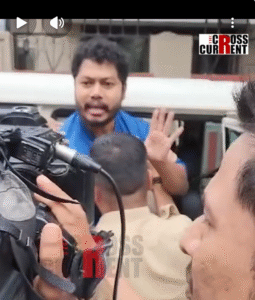
Pranab Doley facing the police (Image Credit: @thecrosscurrentassam1928)
Surveillance of activists
Even before the June 28 incident, Doley and other tribal leaders from the region were targets of elaborate police surveillance. Two weeks before, they were followed by police in civilian clothes. When confronted, the plain-clothed police personnel said they were searching for a bike thief!
On July 12, Doley was apprehended in Guwahati from a private residence after his movements were tracked. He was taken to Dispur Police Station for further questioning, physically dragged to a police car and prevented from speaking to the local media present on the spot. He was detained in Guwahati for around 18 hours without any warrant or legal procedure and was formally arrested only on July 13 in Bokakhat police station.
On July 29, a bail order by the Additional Sessions Judge, Nur Muhammad Abdullah Ahmed in Golaghat stated clearly that the Assam Police did not follow procedure while arresting Doley. “It is apparent that no written information of ‘grounds of detention’ was given to Pranab Doley despite WhatsApp communication made by the friend of Pranab Doley with O.C, Bokakhat P.S, O.C Dispur P.S., and e-mail communication with S.P., Kamrup, and S.P, Golaghat on 12/07/2026.”
Within three days of his arrest, his close associate Brijit Kutum and Adivasi leader Amit Nag were also picked up by the Bokakhat Police while Bhaskar Saikia and Rajib Pegu surrendered before the Court. The FIR shows grounds of arrest ranging from Doley being the ‘mastermind’ of the alleged unlawful assembly, criminal trespass, carrying deadly weapons like bamboo and a machete, threatening construction workers, attempting to damage and set fire to a cement mixer, assault on police personnel, outraging the modesty of women police personnel, damage to government property, non-compliance with police and executive magistrate, extorting money, travel to foreign countries and having links with ‘radical’ groups, and that he has 11 criminal cases already against him.
The bail order, however, nullifies most of the charges. For instance, paragraph 21 of the appraisal says, “One of the video clips shows the accused Pranab Doley and others holding a face-to-face discussion with District Administration officials. They requested a solution through dialogue, noting that the protest would continue until their demands were met. Crucially, the footage does not show them instigating the protesters at any point. Their face-to-face discussion ended calmly with a short vote of thanks to police personnel and District Administration officials.”
Raids on activists’ homes
On July 13, Pranab was remanded to seven days’ police custody by the district magistrate in Bokakhat. Simultaneously, an indefinite strike was begun in Bokakhat in protest at the arrests. The week after their arrests saw multiple raids not only in Pranab’s residence, but also in his associates’ and affected families’ houses as well.
Geeta Gowala, one of the affected families of the project, says, “We might fall sick, but we still have to do this for our rights. No matter how much our health suffers, we will keep doing this for our rights. We will continue the protest until Pranab Doley and others arrested are released. The government hasn’t even permitted us to set up a shade. What kind of government is this?”
She further adds, “We are fighting for our own rights. They have to return our land to us. This is all we want. No one can build a hotel on our land, and we won’t let them. Don’t wave money at us and try to tempt us. We have no greed for money; we only need our land,” she added, implying the alleged cheques handed over to some families worth Rs. 3 lakh from the Assam Chief Minister’s Relief Fund.
The draconian NSA provisions
Even as the bail plea was approved on July 30, Doley was detained under section 3(2) of the National Security Act. Assam’s Home and Political Department stated that the grounds for his arrest were his organising work, travels to foreign countries, and receiving foreign funds, and further dragged in all previously filed cases related to Pranab, one movement or the other, as a threat to India’s national security.
However, rejecting the public prosecutor’s demand to extend the custody of Doley and his associates, including Amit Nag, the judge’s bail order shows that the NSA charge too was motivated by the positions held by his political rivals rather than by national security concerns:
“Prima facie the present dispute arises from a deep-rooted anxiety regarding environmental degradation and its impact on the socio-cultural fabric of the local Tea Tribes. In matters where ecological preservation intersects with indigenous survival, the standard apparatus of criminal law cannot be used to suppress local anxieties. True public order is achieved not by silencing the affected, but by listening to them. Disputes of this nature require participatory environmental governance. Therefore, while granting bail to the accused to ensure his personal liberty, this Court expects that the underlying grievance be addressed through structured, peaceful community dialogue involving all stakeholders, rather than through adversarial confrontation.
It is also germane to mention here that in cases involving marginalised groups like the Tea Tribes, structural inequalities often prevent local communities from negotiating on equal terms with corporate or state entities. In this situation, viewing activists or community leaders as merely an “external disruptive element” will not lead to positive outcomes over time. Therefore, involving social activists and community leaders in the dialogue process is essential to ensure fairness and balance in the power dynamics, ultimately contributing to a sustainable solution.”
As Doley prepares to challenge the harsh provisions of the National Security Act (NSA) without legal representation, as required by the rules, the Gauhati High Court has sought the Assam government’s response to a writ petition contesting Doley’s detention under the NSA. The court has directed the Home and Political Department to appear before it on September 14. Meanwhile, people across various communities in the Northeastern states are calling for Doley’s release and the reversal of the detrimental five-star hotel projects in Kaziranga.
In the words of a young protester at a gathering in support of Doley’s release in Chachal, Guwahati, on August 22, “We are part of this nation. Doley is fighting for the security of our future and our rights, as well as the rights of future generations, while demanding protection for Kaziranga and its communities. Isn’t this a misuse of power? How is Pranab Doley a threat to national security?”
(*Juheb Hussain is a climate activist and is also preparing for graduate studeies in political science. He is based in Guwahati, Assam.)