
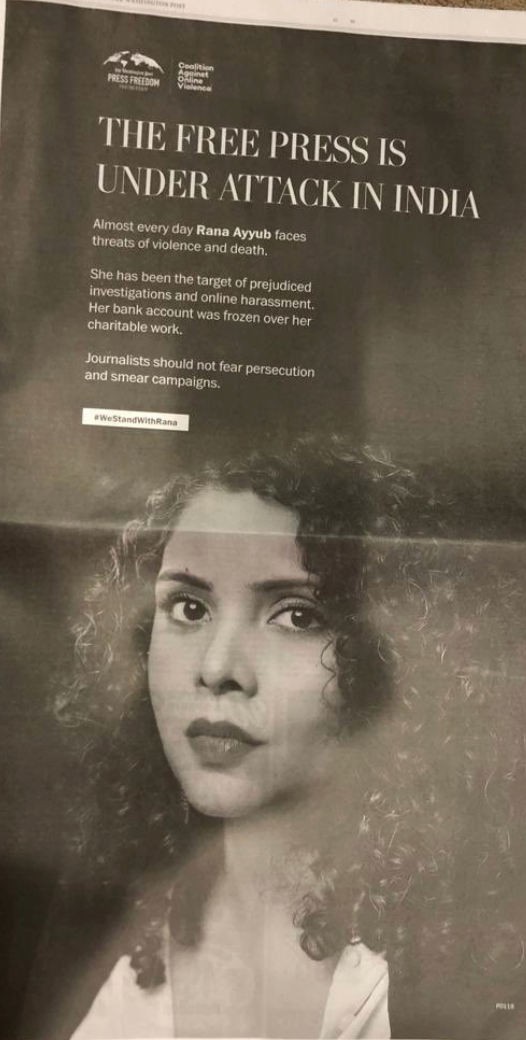
What a packed week for freedom of expression in India! From court proceedings against journalist Rana Ayyub for tweets posted 13 years ago, contempt of court threats against Medianama editor Nikhil Pahwa, Maharashtra legislative Assembly proceedings against stand up comedian Kunal Kamra, threats by Assam Chief Minister Himanta Biswa Sarma against journalists and the spectre of the draft amendments to the IT rules…
The threats to free speech in India have been coming fast and furious, targeting writers, filmmakers, student activists, social media users and influencers and just about anyone who raises even a whiff of dissent. For independent journalists, the rollout of more regulations governing news and current affairs will make their work more perilous than ever.
The ironic or satirical comments – which may be perfectly legitimate opinions – expressed against politicians or long deceased historical figures get the goat of their thin-skinned supporters, embroiling the offending commentator into judicial proceedings.
Here’s a recap of the week that was:
Rana Ayyub’s tweets
On April 8, Justice Purushaindra Kumar Kaurav of the Delhi High Court decided that “action is necessary in view of the highly derogatory, inflammatory, and communal tweets” posted by journalist Rana Ayyub between 2013-17. Acting on a writ petition filed by Delhi-based advocate Amita Sachdeva that the tweets insulted Hindu deities and “revered” historical figures, the court directed Delhi police to register an FIR.
On April 10, the court heard the matter again. Appearing on behalf of Rana Ayyub, Adv Vrinda Grover raised the issue of the maintainability of the petition and the court has posted the matter to May 19. However, the Central government, in its affidavit, said that notices had been issued to the platform ‘X’ to remove the tweets and its failure to do so “amounts to non compliance and can lead to withdrawal of its safe harbour protection in India.” On its part, “X” said that the petition is not maintainable against it and that the procedures laid down under Sec 69 A of the Information Technology Act, 2000 need to be followed for blocking of content. Moreover, the originator of the post was known and any direction to take down the tweets should go to her and not the platform.
What are the tweets in question? In her petition, Sachdeva took offence to six tweets made by Ayyub between 2013 and 2017. The 2013 tweet by Ayyub read, “Ravana didn’t touch Sita even though he could. Ram didn’t stand for Sita even though he should have. Ravana 1 Ram 0.” In October 2014, Ayyub quoted a couplet by the renowned Urdu poet Ali Sardar Jafri, which read, “Gareeb Sita ke ghar pe kab tak rahegi Ravan ki hukmrani, Draupadi ka libas uske badan se kab tak chhina karega”. In 2015, Ayyub’s tweet about Hindutva leader Veer Savarkar said, “So Veer Savarkar advocated rape as necessary component of Hindutva nationalism.” Another tweet on Savarkar, accompanied by a screenshot of a book, Ayyub said, “Was reading Nathuram Godse’s account of Savarkar & wondering if we shud continue to honour the terrorist sympathiser.” In 2016, Ayyub had posted a tweet with the picture of a boy with pellet injuries on his face and asked, “Dear Indian army, am guessing this young kid was quite a threat to the sovereignty of India to be blinded for life.” Yet another tweet, made in 2017, was merely quoting an interview of journalist Aakar Patel by television anchor Rajdeep Sardesai which said: “Kashmiris have stopped expecting justice from the army or the Indian state. Sad but true.”
Inexplicable as it may seem, these tweets were deemed to disturb a country’s public order or national security, sovereignty or foreign relations, under Sec 69 A of the IT Act.
Kunal Kamra and Maharashtra Legislative Assembly
On April 9, satirist and political commentator Kunal Kamra appeared before a hearing of the Privileges Committee of the Maharashtra Legislative Council. Summoned to respond to breach of privilege notice following alleged disparaging remarks made against Deputy Chief Minister Eknath Shinde in March 2025, Kamra buckled down and refused to apologise.
Bharatiya Janata Party MLC Pravin Darekar had moved the breach of privilege motion against Kamra and Shiv Sena leader Sushama Andhare. The latter cited health reasons and sought another date for her appearance.
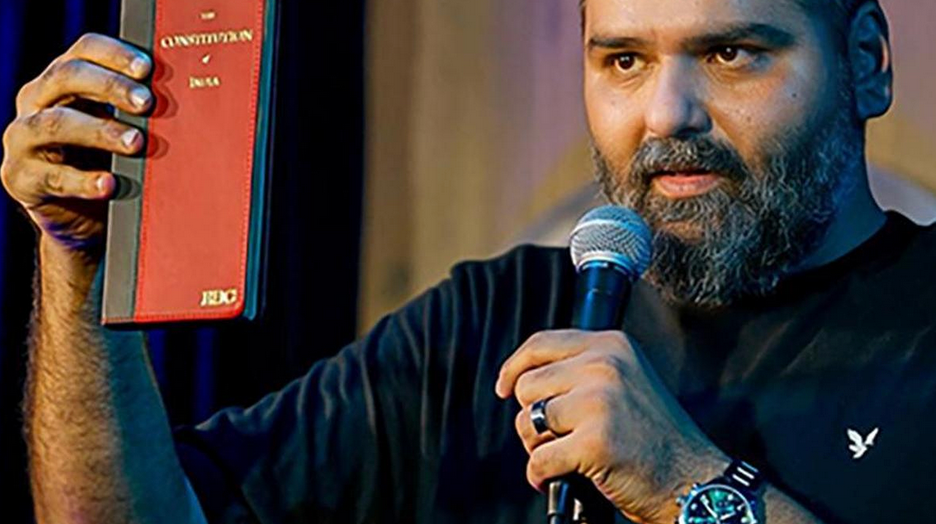
Kamra had earlier performed a parody song on the politician, without naming Shinde, and the venue of the performance in Mumbai was ransacked by Shinde’s supporters. Kamra, who had earlier appeared before the committee twice earlier, was sticking to his ground. In a tweet after the hearing, he said :
Respected sir maybe there was a communication issue but the way I remmeber the last 3 questions of my cross examination this evening – Do you feel remorse – No Are you sorry about what you said- No If you tender an unconditional apology this matter will be looked at differently – No I can’t as the apology would not be sincere. Also it would set a terrible precedent for other artists & their freedom.
Interestingly, BJP MLC Prasad Lad, who is the head of the Privileges Committee, left no doubt about the fairness of the procedure as he referred to Kamra’s statements as “mistakes” . Talking to reporters, he said, “Today was Kunal Kamra’s 3rd or 4th hearing. Today we had to record his testimony. In this matter, Pravin Darekar had filed a complaint against him. Today was the time to cross-question him. Kunal Kamra and Pravin Darekar were cross-questioned. 24 questions were asked to Kunal Kamra. In which he tried to explain his mistakes. He tried to ask about the rights of the constitution. He tried to ask about the rights of the privilege committee..’’
On his part, Kamra has questioned the jurisdiction of the committee. He maintained that a breach of privilege would need to be based on an actual transaction of the business of the Assembly or cause an actual impediment to the proceedings.Kamra also pointed out that politicians like former Prime Minister Indira Gandhi didn’t take offence to satirical cartoons by Shiv Sena leader Ban Thackeray.
The issue is really about the untrammelled powers of elected representatives to police any criticism of themselves. Journalists organisations have long demanded a codification of the privileges of elected representatives and in its absence, the breach of privilege power by state legislative assemblies and Parliament becomes an ever present threat to freedom of expression.
Nikhil Pahwa and contempt of court threat
In a curious case, the Medianama founder Nikhil Pahwa posted a tweet about a legal notice received by his organisation investigating a data breach.
The tweet said the organisation had “received a legal notice seeking to prevent us from reporting on a data breach that potentially impacts members of the public, and listed companies (hence shareholders) We had contacted the breached/co for comments in good faith, in order to represent their position because the breach is confirmed.”
While Pahwa’s tweet gave no further information about where the data breach occurred and why a legal notice was issued in response to comments solicited for a story, the entire episode has the makings of a SLAPP suit. A data breach is serious and needs investigation, with total transparency from all quarters.
Amid MEITY media briefings in Delhi, six journalists organisations protest IT rules
On April 8, hurried briefings were held by S Krishnan, Secretary Ministry of Electronics and Information Technology (MeitY) with representatives of the industry and the media in Delhi. Members of the media expressed their reservations over the government’s proposal to regulate user-generated “news and current affairs”content by the Ministry of Information Broadcasting’s code of ethics and make government advisories binding on intermediaries, among other proposals.
Instead of responding to the demand for scrapping it altogether, the deadline for submissions to the draft IT rules was extended to April 29 (from April 14 ).
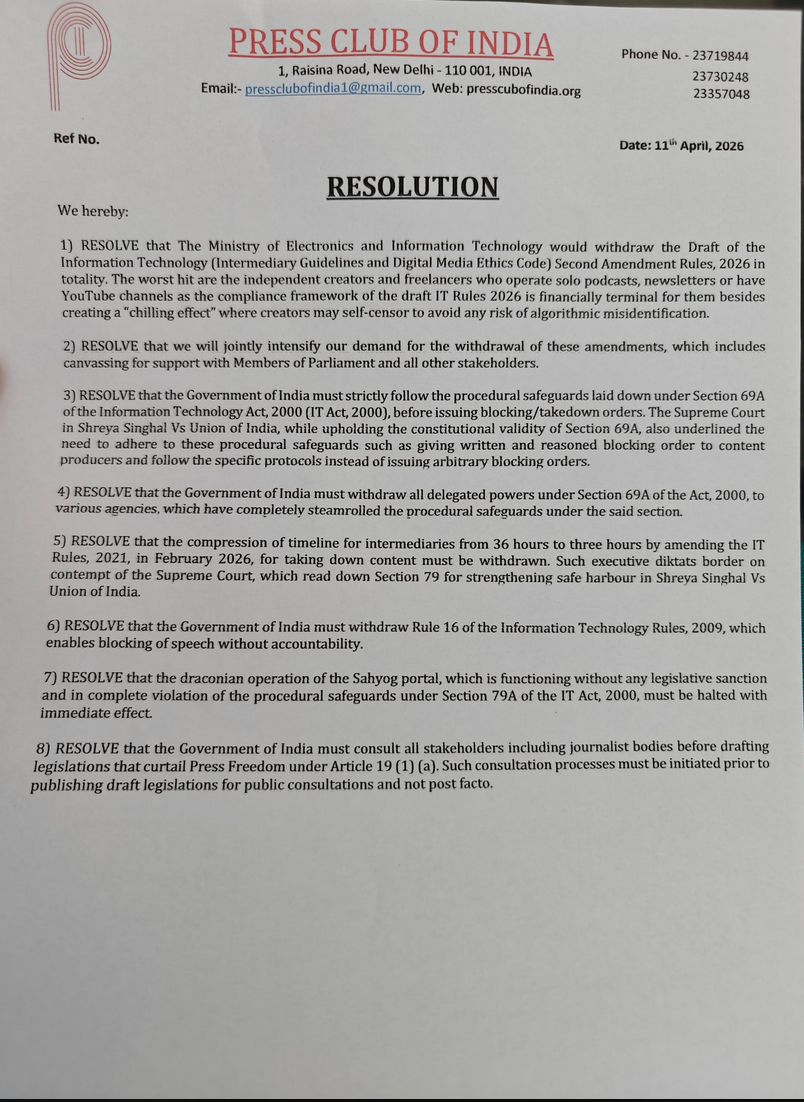
Journalist organisations continued to voice their opposition to the draft rules. In a well-attended meeting on April 12, six journalists” organisations spoke up about the threat to their work by the draft amendments to the IT Rules. They are the Presss Club of India, DIGIPUB, Editors’ Guild of India, Indian Women’s Press Corp, Network of Women in Media, and Delhi Union of Journalists.
In a statement, they demanded the withdrawal of the draft IT rules and said the compliance framework of the draft rules is financially terminal for them and would also create a “chilling effect,” forcing creators to self-censor to avoid any risk of algorithmic misidentification.
Guwahati Press Club protests threat by Assam CM Himanta Biswa Sarma
On April 11, more than a hundred journalists gathered at the Gauhati Press Club to protest the “attacks on media” during the recently concluded Assam Assembly elections. They cited several troubling incidents, including remarks by Assam Chief Minister Himanta Biswa Sarma suggesting he would “politically and intellectually” finish off two media groups if re‑elected, as well as an alleged attack on the North Lakhimpur office of the Assamese daily Asomiya Pratidin shortly after polling ended on April 9.
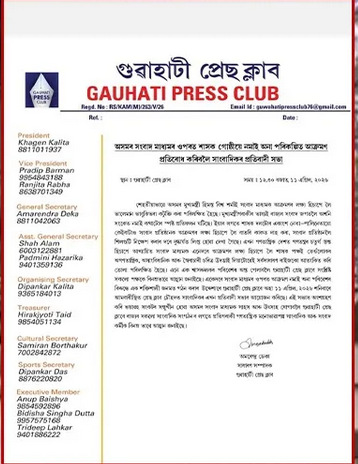
They warned of growing threats to press freedom in the state and resolved to escalate the issue to the highest authorities, including the President, the Prime Minister, and the Election Commission of India.
During the election campaign, Sarma, talking to journalists, said that his government would finish off the Pratidin media group and DY365, a satellite news channel in Guwahati, “politically and intellectually.” He accused them of blackmail. Soon after his statements were circulated by the media, the office of the Lakhimpur edition of Praditin newspaper office was attacked with stones.
In a statement condemning the attack, the Pratidin newspaper director Rishi Barua blamed the statements of the chief minister and said that the newspaper’s reportage was factual.