

Coinbase is facing additional attention after claims resurfaced about how XRP was listed on the exchange. The issue traces back to statements linked to David Schwartz, who described a possible scenario in 2023 that reflected tensions surrounding the listing process. According to the report, Coinbase declined to list XRP despite clear business incentives.
Coinbase XRP Listing Dispute and Alleged Fee Structure
The case brought out by Schwartz outlined a continued dispute. He said Coibase chose not to list XRP even though it appeared beneficial. According to an X post, Ripple failed to pay the requested listing fee, which pushed the asset off the exchange for months. During that period, both sides maintained their positions, and no listing took place.
Schwartz also noted that the exchange suggested XRP would have been listed earlier if Ripple did not exist. That information gave an explanation for the delay and changed how the situation was viewed internally. However, over time, Ripple reached a financial agreement with Coinbase, allowing the listing to move forward.
Once XRP was listed, it reportedly accounted for about 20% of the exchange’s total revenue. This outcome brought out the trading demand for the asset. Schwartz stated that Ripple viewed the payment as necessary to avoid limiting market access. He also indicated that elements of such arrangements later appeared in legal arguments, where they were used to show influence over adoption or liquidity.
XRP Price Movement and Market Activity
While these claims continue to circulate, the XRP price has displayed a negative price movement. Over the past 24 hours, the asset traded at $1.32 at the time of writing, recording a decline of 1.547%.
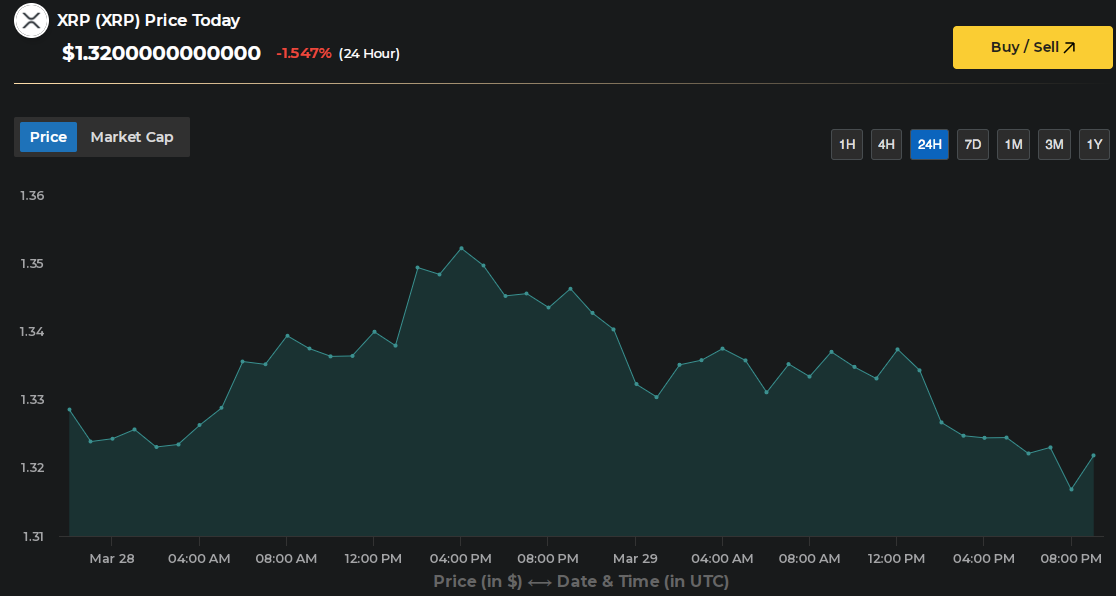
The market capitalization stood at $80.52 billion, resulting in a 2.1% drop. The trading activity also declined, with 24-hour volume at $974.76 million, down by 13.37%.
Institutional Positioning and Policy Context Around Coinbase
At the same time, institutional activity around XRP continues to expand. Franklin Templeton, which manages about $1.6 trillion, outlined its position on the asset. During a podcast, Roger Bayston discussed XRP and its role in financial infrastructure. He referenced the launch of the Franklin XRP ETF and the integration of tokenized money market funds on the XRP Ledger.
Bayston stated that institutions are acquiring XRP based on use rather than speculation. He explained that firms rely on the asset to support operational needs tied to blockchain infrastructure. He also pointed to ongoing regulatory alignment between the SEC and CFTC as a factor that could influence further adoption.
These moves are arising alongside ongoing policy discussions involving Coinbase. The exchange has informed Senate offices that it does not support the latest stablecoin yield compromise linked to the CLARITY Act. Lawmakers, including Thom Tillis and Angela Alsobrooks, have joined efforts to resolve disagreements between banking and crypto stakeholders.
However, the stablecoin rewards rule remains unresolved. Earlier expectations of a compromise have fallen apart after pushback from Coinbase and other industry participants.