
Home » Perspective »
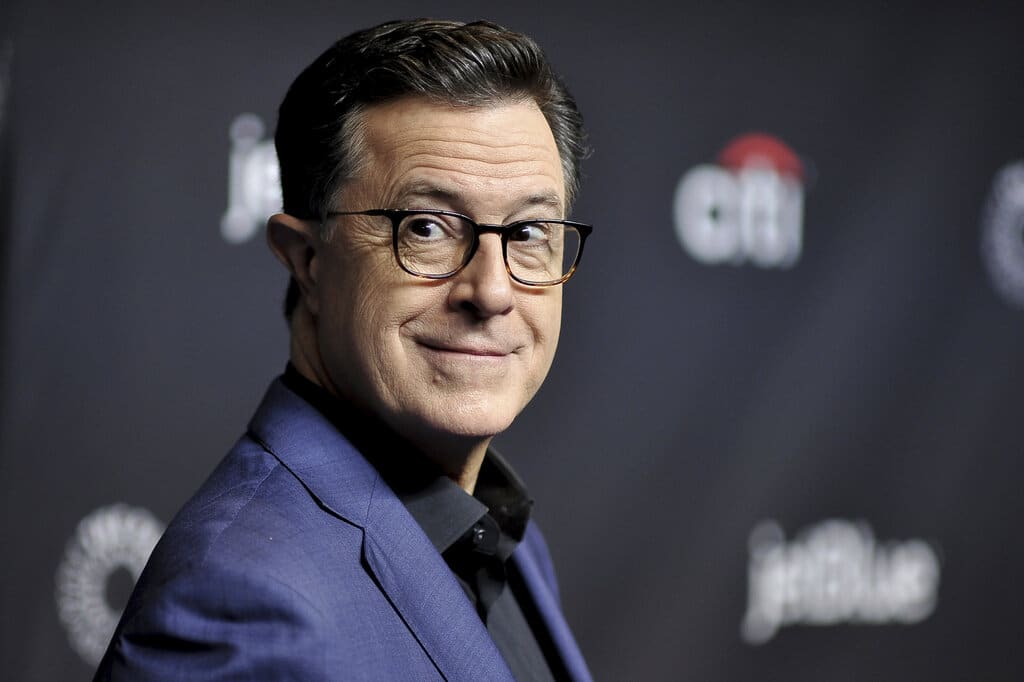
One of the most-watched video clips in recent days was “Late Show” host Stephen Colbert’s interview with U.S. Senate candidate James Talarico of Texas, an interview that Colbert insists was barred from the airwaves by his employer, CBS. For its part, the network maintains it only shared a legal perspective and did not block the broadcast.
The reality lies somewhere between the two. Here’s what you need to know about the equal-time policy, the FCC and America’s talk shows:
Origins of the equal-time rule
This controversy has its roots in a law passed in 1927, just short of a century ago. Radio was growing rapidly as a powerful medium, but technical limitations — then and now — meant that broadcast frequencies were finite and not everyone could receive a license. That’s why the federal government began adopting regulations to help ensure that the public airwaves could not be used for unfair and partisan purposes.
Loosening requirements
The concept of an equal-time requirement first appeared in the Radio Act of 1927 and evolved over the years to prohibit broadcast stations from giving airtime to one candidate and not others in the same race. By 1959, Congress had loosened the restriction so that candidates could appear on news programs or in documentaries without a station’s having to offer comparable time to political rivals.
The talk-show exception
As television evolved, so did the programming of so-called “entertainment” programs. Recognizing that an interview on a talk show might well be as substantive and newsworthy as a newscast, the FCC said in 2006 that “The Tonight Show” with Jay Leno was exempt from the equal-time rule.
A shift in direction
For almost two decades, that principle remained intact. Then FCC Chairman Brendan Carr, appointed by President Trump, announced that the FCC no longer believed that talk shows should be exempt. “For years, legacy TV networks assumed that their late-night and daytime talk shows qualify as ‘bona fide news’ programs — even when motivated by purely partisan political purposes,” Carr said. He announced that the FCC was going to investigate ABC’s “The View.”
Weighing partisanship
This was a dramatic departure from precedent, asserting that the government can impose greater controls if it decides that a program is partisan. To date, Carr has only targeted programs — “Jimmy Kimmel Live,” Colbert’s “Late Show” and “The View” — that he regards as liberal. He has said he is not pursuing action against radio talk shows, which largely skew conservative.
What the FCC cannot do
Carr cannot call for probes of cable or streaming outlets because the FCC has no power over anything that is not broadcast over the air. That means he can launch an investigation of “The View” for its booking practices, but not Bill Maher’s show on HBO. It also means that the FCC can announce that it’s discounting the news value of “partisan” talk shows while cable empires are built around intensely partisan “news” programs. And of course, the FCC might have intimidated CBS as a broadcast network but could not limit distribution of the interview over the internet.
A question of censorship
Was Colbert “censored?” CBS insists the decision was Colbert’s, but that it alerted him to Carr’s shift in policy and warned him of the potential consequences. That very warning, though, seemed to convey a threat. Was there no one in the CBS legal department prepared to say, “The FCC has not successfully penalized any talk show on equal-time grounds this century. Alleging partisanship is constitutionally suspect and we have your back”?
Future of the FCC
We live in a special nation that had the wisdom to guarantee freedom of speech 235 years ago. That guarantee remains in place, barring the government from limiting what we watch, read and listen to. Yet there’s that one asterisk giving the FCC very limited, but potentially dangerous, authority to limit the free flow of ideas. The FCC has power only over century-old technology in a digital and AI world. Its days are numbered.
Ken Paulson is director of the Free Speech Center at Middle Tennessee State University.
The Free Speech Center newsletter offers a digest of First Amendment and news-media news every other week. Subscribe for free here: https://bit.ly/3kG9uiJ