
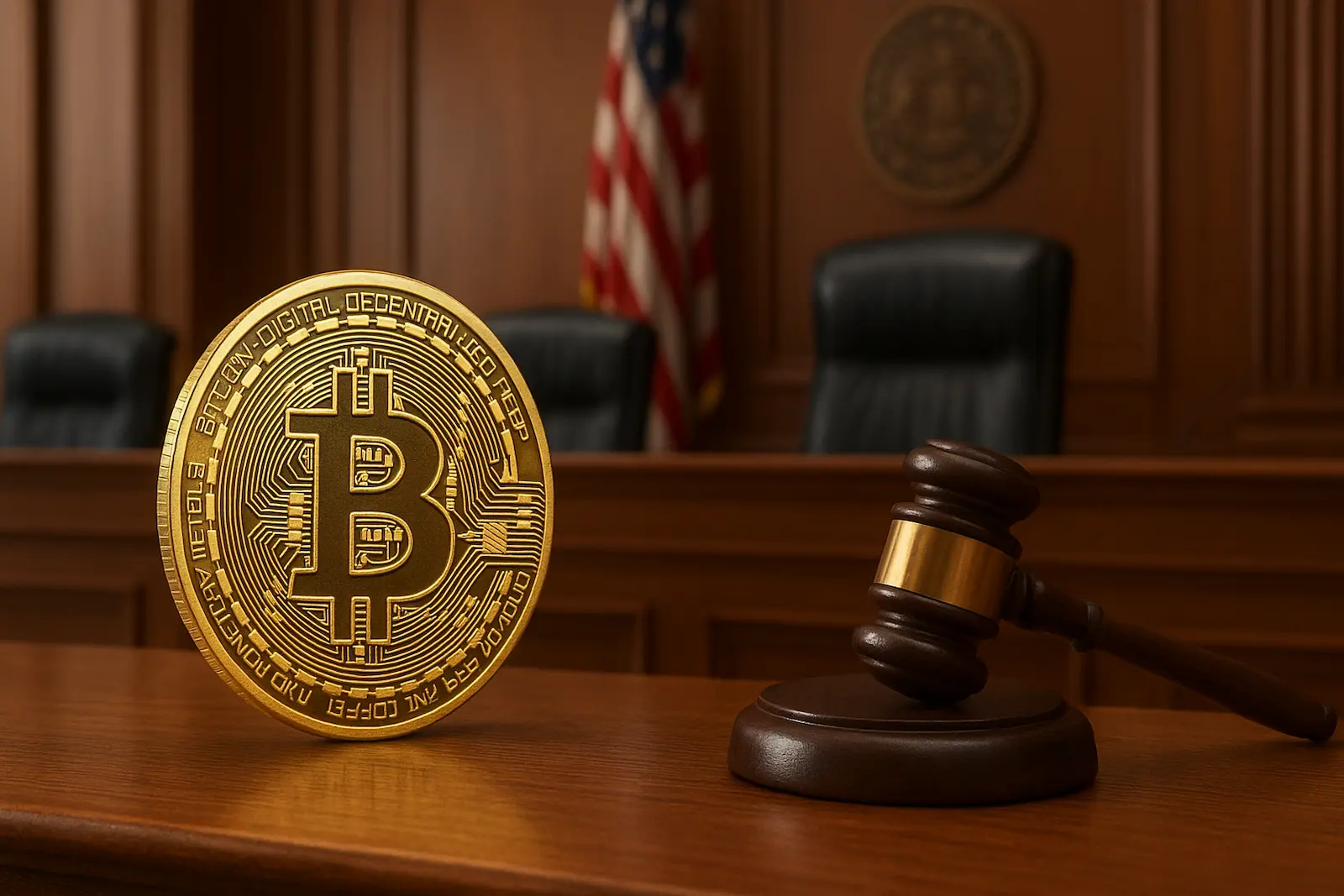
2025 is rapidly becoming a watershed moment for the crypto industry’s legal landscape. The decisions in courtrooms this year will influence regulation, investment flows, and consumer confidence in blockchain technology. Among the most pivotal cases are SEC lawsuits involving Ripple and Coinbase. These battles don’t just affect the companies involved—they carry implications that will ripple across the entire ecosystem.
1. Ripple vs. SEC: Defining Securities in Crypto
Background:
The U.S. Securities and Exchange Commission (SEC) filed a lawsuit against Ripple Labs in late 2020, alleging that Ripple’s XRP token was sold as an unregistered security.
Key Issue:
The central legal question: Is XRP an investment contract—i.e., a security—under the Howey test? If it is, then Ripple was required to register XRP as a security before selling it.
2025 Developments:
After nearly five years of heated legal wrangling, a judge recently ruled that institutional XRP sales did qualify as securities, while the public token offerings did not. However, the SEC has appealed. The outcome hinges on which sales fall under securities laws, creating significant precedent for how tokens are classified.
Industry Implications:
- Token Classification Clarity: Crypto assets may now need clearer definitions—securities or commodities—directly influencing how new tokens are issued.
- Regulatory Uncertainty: Companies issuing tokens may adopt a cautious approach until they’re certain of compliance.
- Cross-Border Impact: As global jurisdictions monitor the outcome, international regulatory responses could accelerate or slow innovation depending on how sympathetic they are to blockchain.
2. Coinbase vs. SEC: The Future of Exchange Oversight
Background:
In 2022, the SEC sued Coinbase over allegations that certain crypto products—like staking and lending—violated existing securities laws. The complaint highlighted that exchanges are functioning like unregistered broker-dealers.
Key Issue:
Can an exchange offer crypto services like lending, staking, or yield generation without being registered and regulated as a securities entity?
2025 Developments:
Coinbase has pushed back, arguing that only clearly defined security assets fall under SEC authority. Parallel suits against Binance and Kraken put pressure on regulators to either carve out crypto exceptions or regulate comprehensively.
Industry Implications:
- Exchange Regulation: How this plays out could determine whether exchanges nationwide need to restructure as broker-dealers.
- Service Evolution: Features like yield staking, borrowing, and derivatives may become restricted if exchanges are forced to undergo stricter oversight.
- Market Entry: New exchanges may opt for offshore bases or significant structural changes to avoid U.S. regulatory constraints.
3. SEC vs. Individual and Corporate Entities
Beyond Ripple and Coinbase, the SEC has targeted various crypto entities. Cases involving Terra founder Do Kwon and celebrities promoting tokens have intensified scrutiny on questionable token marketing and governance.
Industry Implications:
- Marketing Ethics: Endorsements without proper regard for disclosure rules are likely to be heavily regulated.
- Focus on Founders: Large token issuers will have to enforce much tighter compliance with issuance documentation.
4. What These Lawsuits Mean for Blockchain’s Future
Clarity — But With Caveats
These lawsuits promise to clarify how tokens are viewed through a legal lens. While that’s welcome, it doesn’t eliminate uncertainty. Companies will need to navigate a complex web of U.S. and international regulation, adapting their structures and disclosures accordingly.
Market Retracement or Resilience?
Short-term, compliance-related retrenchment is likely. We’ll probably see fewer innovative DeFi products launched in the U.S. Over the long term, however, clear regulation could boost investor confidence and create fertile ground for institutional participation.
Crypto Gaming and NFTs: Will They Face the Same Scrutiny?
The lawsuits may extend their reach to NFT platforms and blockchain-based gaming. Features like token staking or random-number generation may draw regulatory attention.
This is especially relevant for platforms that merge gaming with finance like the innovative Razed crypto casino for instance, where staking mechanisms, tokenized jackpots, and dynamic in-game economies converge. As regulatory scrutiny intensifies, such platforms must prioritize transparency and robust consumer safeguards to continue thriving in a rapidly evolving legal landscape.
5. Market Reaction So Far
- Price Volatility: XRP and Coinbase’s stock have seen frequent swings following legal updates.
- Innovation in Compliance: Companies are adopting self-regulatory models, or moving operations to “crypto-friendly” jurisdictions.
- Capital Realignment: Investors are growing wary, shifting towards regulated or exchange-traded crypto vehicles like Grayscale trusts.
6. What Holds for 2025?
- Ripple Appeal Verdict: If the SEC’s appeal succeeds, it would mark a seismic shift, reshaping token issuance rules.
- Coinbase Policy Change: Any final ruling favoring the SEC could force exchanges to overhaul services or exit specific markets.
- New SEC Guidance: The regulator promised clearer rules this year, which may come in the form of token classification frameworks.
- Congressional Involvement: Ongoing legislation in Washington could create a legal path for crypto without relying on court rulings.
Final Thoughts: The Stakes Are Monumental
The outcomes of these lawsuits will define the future of blockchain in America—and potentially the world. They determine not only whether tokens are treated as securities but also how exchanges and platforms can innovate or disperse from regulated zones.
As the smoke clears, companies that build with compliance in mind—those that integrate best-in-class legal, structural, and ethical safeguards—are likely to prosper. Platforms that blend entertainment and tokenization, like a blockchain casino or in-game staking, should especially focus on transparency and player protection.
In 2025, the courtroom is emerging as the new frontier of blockchain innovation. The rulings that come out of cases like Ripple and Coinbase won’t just rewrite laws—they’ll shape the blueprint for the next generation of Web3.