

YEREVAN (CoinChapter.com) — Circle, the issuer of USDC, has reportedly postponed its IPO plans following a market downturn triggered by Donald Trump’s trade policy. Earlier this week, Trump announced a 10% tariff on all imports, prompting China to retaliate with its own trade measures.
The news sent shockwaves through U.S. financial markets. The S&P 500 and Nasdaq recorded their steepest one-day declines in more than a year. Volatility indexes also jumped, making conditions difficult for companies planning to go public.
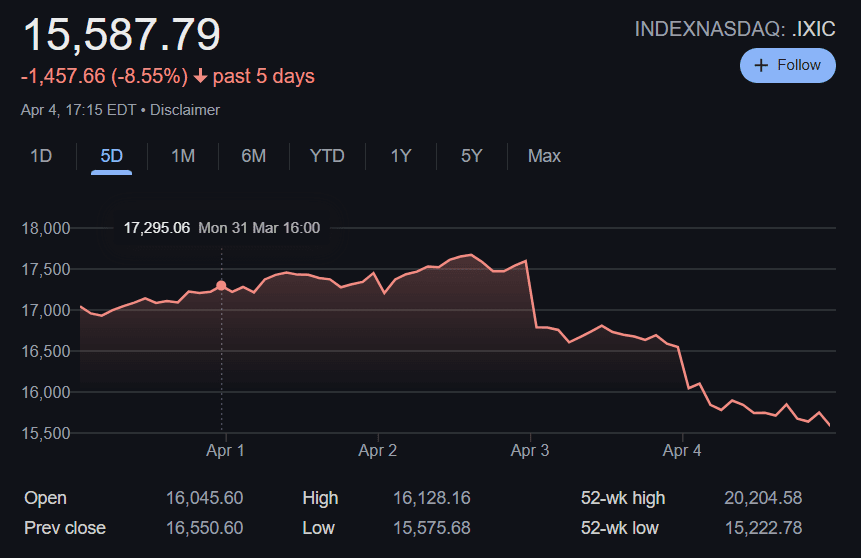
Sources familiar with Circle’s operations say the company has paused IPO preparations. Circle has not issued a public comment on the matter. The delay was expected as the company had previously filed confidentially with the U.S. Securities and Exchange Commission (SEC) and was preparing to begin investor meetings.
Klarna and StubHub Also Delay IPOs
Circle is not the only firm taking a step back. Klarna and StubHub, which also filed confidential IPO documents, have reportedly suspended their listings as well. All three companies had aimed to go public this quarter but are now reconsidering due to unstable market conditions.
The IPO market volatility caused by trade actions has raised investor concerns. A spike in market uncertainty often affects IPO pricing. Investors avoid committing capital when valuations might drop shortly after listing.
The introduction of the 10% tariff has made U.S. companies with international exposure particularly cautious. Tariffs affect trade flows, increase costs, and introduce new risks for firms operating globally. This environment reduces institutional interest in new public offerings.
USDC’s Role Adds Complexity to Circle’s IPO Timing
Unlike other fintech firms, Circle is responsible for USDC, a stablecoin that relies on public trust and regulatory clarity. Its operations require approval from multiple jurisdictions and cooperation across borders. Any disruption to global trade or currency stability could affect the stablecoin’s use and perception.
The Trump trade war and a rising U.S. dollar may challenge Circle’s ability to maintain confidence in USDC, especially in countries with skepticism toward U.S.-led financial infrastructure. Circle’s model is based on transparency and regulatory alignment, and its IPO was part of a long-term strategy to validate that positioning in public markets.
In contrast, Tether does not seek public listing or full regulatory backing. This difference makes Circle more exposed to shifts in international sentiment and trade policy risk.
Circle’s IPO Delay Highlights Crypto Sector Exposure
Circle’s IPO was being watched as a signal of maturity for crypto firms moving into traditional finance. As the company behind USDC, Circle aimed to bridge the gap between stablecoins and institutional adoption.
Going public would have introduced additional scrutiny but also brought credibility in sectors such as banking and payments. The listing was part of Circle’s approach to offer a transparent and regulated alternative in the stablecoin space.
But the current macroeconomic environment, dominated by Trump’s trade policies and heightened uncertainty, has forced crypto-linked firms to rethink their timelines. For those with international operations and compliance goals like Circle, timing a listing during trade disruptions presents more risk than opportunity.
The company has not provided updates on when it may resume the IPO process.